The guide · Early recovery, Timeline
What is normal in the first week after ACL surgery
Swelling, a numb patch, a thigh that will not fire: what the first seven days usually look like, what to work on, and the few things that are not normal.
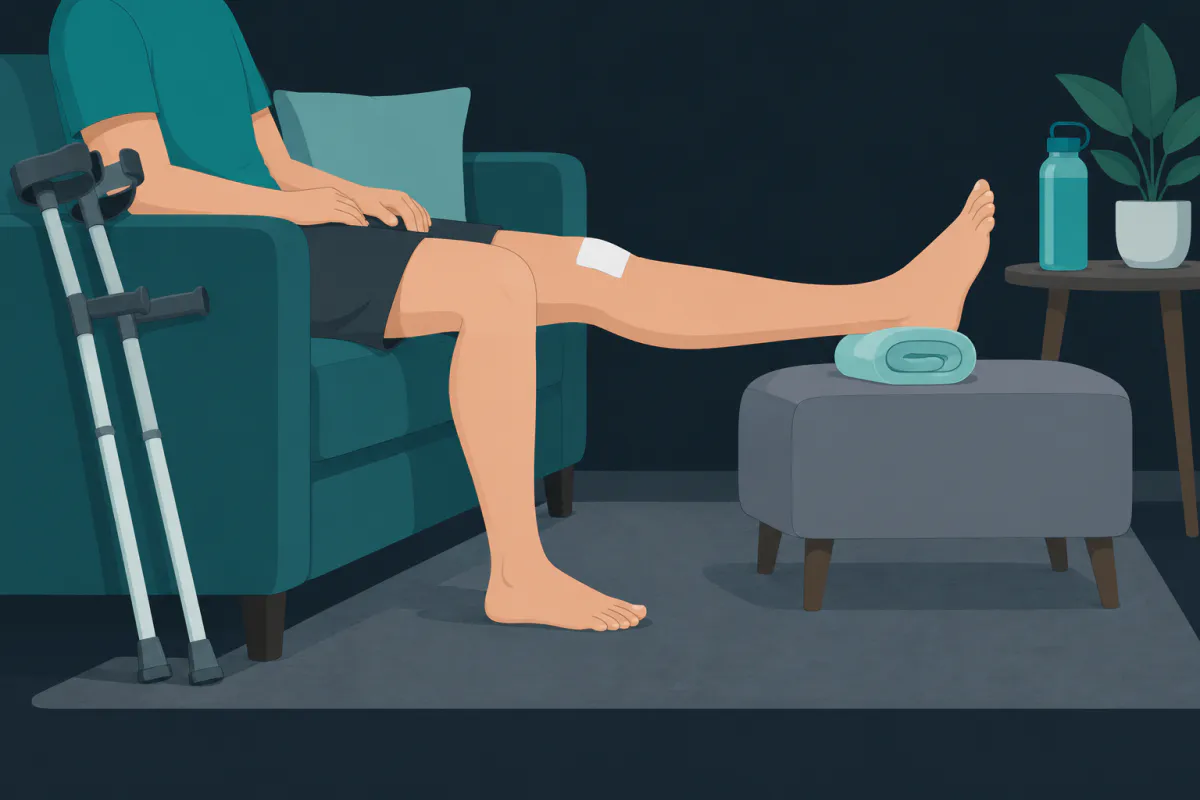
The first week after an ACL reconstruction is the part nobody quite prepares you for. The operation is over, the adrenaline is gone, and you are left with a knee that is swollen, stiff, oddly numb and not doing what you tell it. Almost all of that is expected. This article walks through what the first seven days usually look like, what is worth working on from day one, and the short list of things that mean you should call someone.
Your surgeon’s instructions and your physiotherapist’s programme come first. Where they differ from anything here, follow them.
What you will probably notice
Swelling. The knee will be puffy for days and often weeks. Some of it is the surgery itself, some is fluid inside the joint. Swelling is the main reason the knee feels tight and the reason the thigh muscle switches off (more on that below). Managing it is the first job of the week.
Bruising that moves. Bruising around the knee often tracks down the shin and calf over the first week as gravity pulls it. That looks alarming and is usually harmless. What matters is whether the calf is hot, tight and tender to squeeze, which is a different thing (see the red flags).
A numb patch. Many people have a patch of numb or tingling skin on the outer side of the shin, below and beside the scar. A small skin nerve runs through the area the surgeon has to work in, and it is often bruised or cut. The patch usually shrinks over months; some numbness can be permanent, and it does not affect how the knee works.
A thigh that will not fire. Try to tighten the muscle on the front of your thigh and it may barely respond. This is called arthrogenic muscle inhibition: swelling and pain in the joint switch the quadriceps off. It is universal after this surgery, it is not weakness in the ordinary sense, and it is the reason the first exercises look so easy.
A knee that does not want to straighten. Lying with a pillow under the knee is comfortable and is exactly what a swollen knee wants. It is also how people lose the ability to straighten the leg fully, which is harder to win back later than bending is. Most protocols put full extension at the top of the early goals for this reason.
Poor sleep. Between the brace, the ache and the position you are stuck in, the first few nights are rough. It does get better within a week or two for most people.
What to work on in week one
Rehabilitation guidelines agree on the early priorities even where the details differ. The published consensus guideline from van Melick and colleagues sets out the first phase as controlling swelling and pain, regaining full extension, restoring the ability to contract the quadriceps, and walking as normally as the surgeon allows.
In practice that means a handful of things repeated many times a day:
- Ice, elevation and compression for swelling, in the pattern your surgeon gave you. Elevation means the knee above the heart, not just up on a stool. What each of the three does, and what the trials found, is in ice, elevation and compression after ACL surgery.
- Quad sets. Push the back of the knee down into the bed, hold, relax. Boring, effective, and the foundation of everything that follows.
- Extension work. Time spent with the heel propped and the knee unsupported, letting gravity straighten it. Your physio will tell you how much.
- Gentle bending within the range you have been given. Heel slides are the usual first exercise.
- Kneecap movement. The kneecap should glide; gently moving it side to side and up and down helps stop it stiffening in the scar tissue.
- Walking practice with the crutches and brace as instructed. The aim is a normal heel-to-toe pattern at whatever speed you can manage, not a fast limp. Bad walking habits formed now are hard to undo.
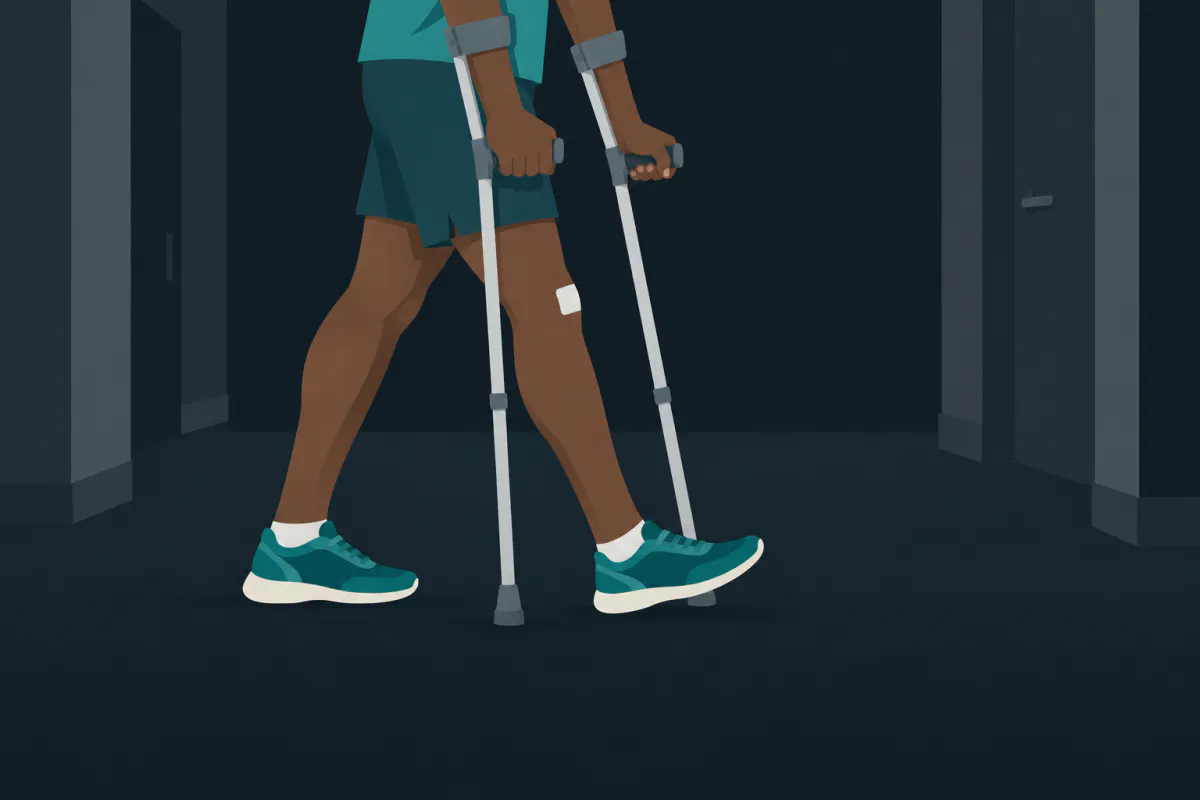
In ACL Recovery Tracker, our free ACL rehab app for iOS and Android, this is Level 1 (early recovery), whose workout opens with gait drills for while you are on crutches, done before you move around. You can use it from the first day home: logging the sessions takes a minute and gives your physio something concrete to look at.
What “good” looks like by day seven
Everyone is different and the graft type, any meniscus repair and the surgeon’s protocol all change the picture. As a rough guide, by the end of the first week many people can straighten the knee close to fully or are clearly getting there, can bend it towards ninety degrees, can produce a visible quadriceps contraction, and are walking short distances with crutches in a controlled pattern. Swelling is still present. Pain is manageable with what you were prescribed.
If you are behind that, it does not mean something is wrong. It means you tell your physio at the next visit so the plan adjusts.
What is not normal
Contact your surgical team, your GP or an urgent care service straight away if you notice:
- A calf that is hot, red, swollen or painful to squeeze, or new shortness of breath or chest pain. These can be signs of a blood clot and need same-day attention.
- Redness spreading around the incision, fluid or pus from the wound, or a fever.
- Sudden weakness in the foot or a change in sensation that is new or spreading, rather than the stable numb patch described above.
- A knee that locks in one position and cannot be moved.
- Pain that is getting worse day by day instead of better, or that your medication does not touch.
The NHS recovery guidance lists the same warning signs, and none of them are things to sleep on. The calf signs are the ones that matter most in this week: blood clots after knee surgery explains what raises the risk and what lowers it.
The mindset for week one
You will not feel like an athlete this week. The work is small, repetitive and unglamorous, and it matters more than almost anything you will do later: full extension and a quadriceps that fires are what the rest of the programme is built on. Do the boring exercises, keep the knee up and cold, and let the app keep count so you do not have to.
The illustrations in this article were generated with AI.
Sources
- van Melick N, et al. Evidence-based clinical practice update: practice guidelines for anterior cruciate ligament rehabilitation based on a systematic review and multidisciplinary consensus. Br J Sports Med. 2016;50:1506-1515.
- NHS. ACL (anterior cruciate ligament) surgery: recovering.
- Filbay SR, Grindem H. Evidence-based recommendations for the management of anterior cruciate ligament (ACL) rupture. Best Pract Res Clin Rheumatol. 2019;33(1):33-47.