The guide · Mobility, Measuring progress
How to measure knee flexion at home with your phone
What flexion and extension mean, why a phone's sensors are good enough to track them between physio visits, and how to take a reading you can trust.
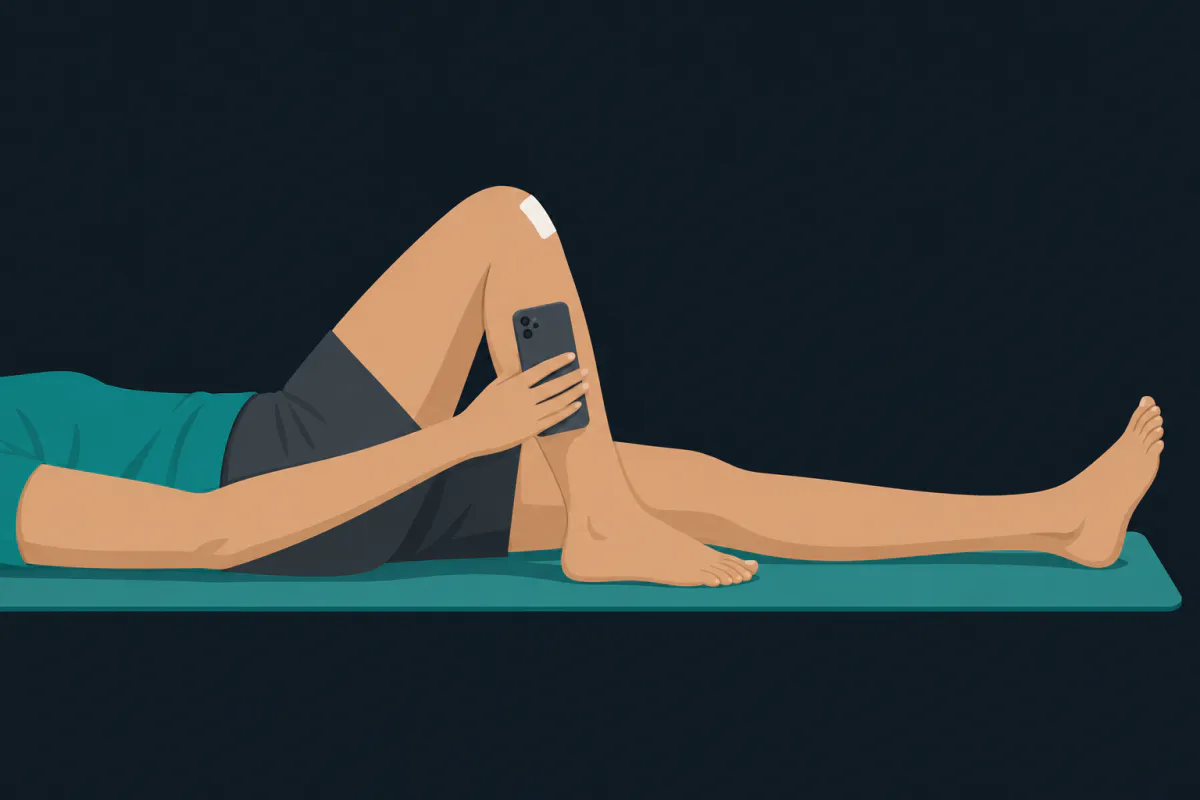
Ask a physiotherapist how an ACL patient is doing in the first months and the first thing they will reach for is range of motion: how far the knee straightens and how far it bends, in degrees. Between appointments, most people have no idea what their number is. This article explains the two measurements, why your phone can take them, and how to do it in a way that is consistent enough to show a trend.
Readings you take at home are for tracking, not diagnosis. Your physio’s measurement in clinic is the one decisions get made on.
Extension and flexion, in plain terms
Extension is how straight the knee goes. A fully straight leg is zero degrees. If your knee sits slightly bent and will not straighten the last bit, you have an extension deficit, usually written as the number of degrees short of straight, for example “lacking 5 degrees”. After ACL reconstruction, regaining full extension early is one of the most consistent priorities in published rehabilitation guidelines, because a knee that cannot straighten changes how you walk and loads the front of the joint.
Flexion is how far the knee bends, measured as the angle between the thigh and the shin. A healthy knee typically bends somewhere around 135 to 150 degrees, enough to sit on your heels. After surgery, flexion comes back gradually: bending to around ninety degrees in the first couple of weeks is a common early target, with the rest returning over the following months.
Both numbers matter. Extension is the one to protect early; flexion is the one that tells you the joint is settling and the swelling is going. The straightening direction has a method of its own, because the last few degrees are the hard part to read: how to measure knee extension at home.
Why a phone is good enough
Clinicians measure range of motion with a goniometer, a hinged protractor lined up along the thigh and shin. It is simple and reliable in trained hands, and it is also not something you have at home.
Your phone contains sensors that know which way it is tilted. Point the phone along a limb and it can report the angle of that limb relative to gravity, which is exactly what a goniometer does. Researchers have compared the two. Ockendon and Gilbert validated a smartphone knee goniometer against a long-armed conventional goniometer and found the phone reliable for measuring even subtle knee flexion, with a mean difference under half a degree. Milanese and colleagues found both a smartphone app and a universal goniometer highly reliable for repeated measurements of knee flexion, in the hands of experienced clinicians and of students alike.
Those studies had someone else holding the phone. Measuring your own knee is a little noisier. That is fine for the purpose: what you want from home readings is a trend line over weeks, and a consistent method gives you one.
Taking a reading you can trust
The measurement in ACL Recovery Tracker, our free ACL rehab app for iOS and Android, walks you through phone placement with an on-screen guide, so follow that. These habits make the numbers comparable from one day to the next:
- Same position every time. Lie on your back on the same firm surface, or sit in the same chair, and note which you chose. Flexion measured lying down is not the same as flexion measured sitting.
- Same time of day. Knees are stiffer first thing in the morning and looser after activity. Measure at a consistent point, for example after your morning exercises.
- Bare shin, phone flat against it. Clothing and a phone case with a bulge both tilt the reading. Line the phone up along the shin bone, not the calf muscle.
- Move to your comfortable limit, not your painful one. Ease into the bend or the straightening and stop where you feel a firm stretch. Forcing it gives a bigger number and an angrier knee.
- Take it twice. If the two readings are more than a few degrees apart, take a third and log the middle value.
- Measure both legs. Your healthy knee is your personal target. The app compares the two, and the gap closing is the story you want to watch.
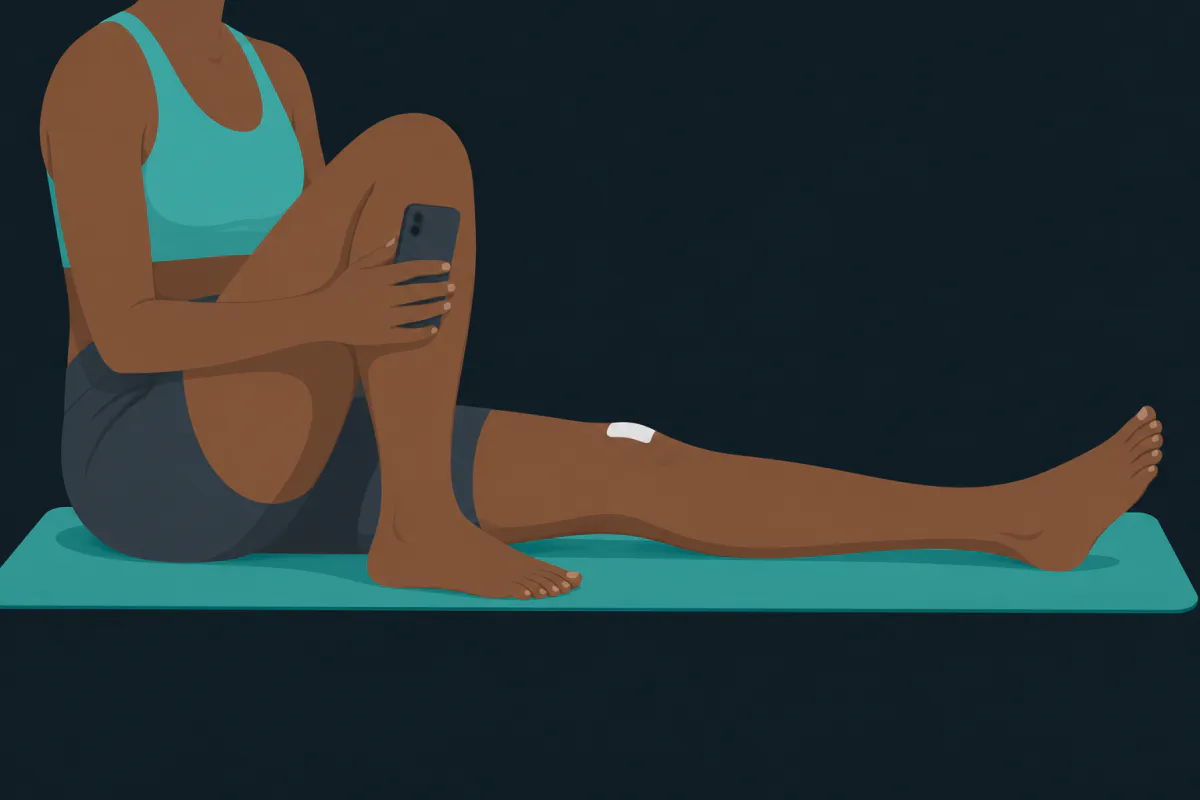
If you already have a number from your physio, type it in instead. The chart does not care where the reading came from.
What the trend should look like
Early on, extension should improve week by week until it matches the other leg or gets within a degree or two. Flexion climbs more slowly and often in steps, with a good week followed by a flat one; that is normal. Swelling, a hard session or a poor night’s sleep can all cost you a few degrees on a given day, which is why one reading tells you little and a month of them tells you a lot.
Two patterns are worth raising with your physio rather than waiting for the next appointment: extension that is getting worse instead of better, and flexion that has not moved for a few weeks despite the exercises. Neither is an emergency, but both are easier to address early.
Why bother logging it
Range of motion is a progression criterion at several levels of the programme, and it is something your physio will want to know at every visit. A dated log with both legs on it turns “I think it’s a bit better” into a chart, and it takes about a minute a day. You can use the app’s mobility log for exactly this, whether the phone took the reading or your physio did. Measure, log, move on. What to look for in an app for this, if you are choosing one, is in how to choose an ACL rehab app.
The illustrations in this article were generated with AI.
Sources
- Milanese S, et al. Reliability and concurrent validity of knee angle measurement: smart phone app versus universal goniometer used by experienced and novice clinicians. Man Ther. 2014;19(6):569-574.
- Ockendon M, Gilbert RE. Validation of a novel smartphone accelerometer-based knee goniometer. J Knee Surg. 2012;25(4):341-345.
- van Melick N, et al. Evidence-based clinical practice update: practice guidelines for anterior cruciate ligament rehabilitation based on a systematic review and multidisciplinary consensus. Br J Sports Med. 2016;50:1506-1515.