The guide · Using the app, Measuring progress
How to choose an ACL rehab app
What to look for before you commit: criteria-based progression, range-of-motion and pain logging, a programme your physio can change, and where your data goes.
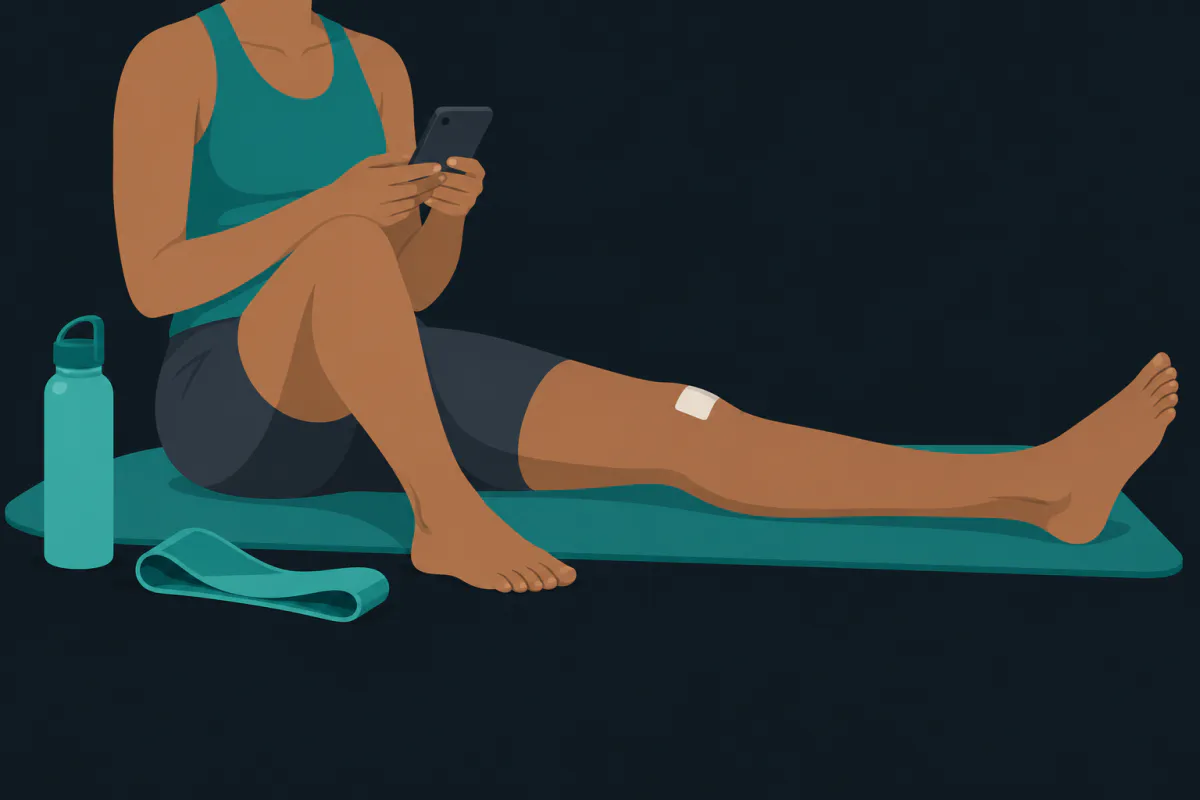
Search for an ACL rehab app and you will find dozens, most of them a list of exercises with a timer attached. Some are built around the way rehabilitation after this operation is actually structured; some are a general fitness app with the word knee in the title. The store listing rarely says which, so this article sets out what to look at before you hand months of your recovery to one.
Whatever you install, the programme belongs to your surgeon and your physiotherapist. An app is a way of carrying out and recording the plan they set. It is not a second opinion on it, and nothing in one is a reason to change what you were told in clinic.
What an app can realistically do
The evidence supports apps as a way of getting the home programme done, not as a better programme. Sun and colleagues pooled 16 randomised trials covering 1,064 people after ACL reconstruction and found that digital health technology improved adherence to rehabilitation (standardised mean difference 0.29, 95% confidence interval 0.02 to 0.56), alongside improvements in pain, muscle strength, proprioception and walking ability. That review covered digital tools broadly — wearables, virtual reality and telerehabilitation platforms as well as phone apps — so it is evidence for the category, not for any particular app.
Lambert and colleagues ran the narrower experiment. Eighty people with musculoskeletal conditions were prescribed a four-week home exercise programme and randomly given it either on paper or through an app; the app group also received phone calls and motivational text messages. Adherence was better in the app group, and the authors’ own conclusion was that the clinical importance of that extra adherence is unclear. Worth noticing what the intervention contained: an app and a human checking in.
An app is also not a way of working out whether something has gone wrong. The NHS lists the standard warning signs after this surgery — a calf that is hot, red, swollen or painful; a fever with spreading redness or discharge at the incision; new weakness or numbness in the foot; a knee that locks and will not move. Any of those means contacting your surgical team, your GP or an urgent care service the same day. It is not an entry in a symptom log.
Criteria, not the calendar
The most useful question to ask of an app is what makes it move you on.
Rehabilitation after ACL reconstruction is organised around what the leg can do rather than how long ago it was operated on. The consensus guideline from van Melick and colleagues is explicit that progression is criteria-based, and states the underlying rule plainly: loading is advanced where the movement pattern is correct and there is no pain, no effusion (fluid inside the joint) and no increase in symptoms afterwards. That is the same criterion-based structure Noyes’ Knee Disorders sets out for the phases of rehabilitation and for return-to-sport testing.
Why it matters shows up at the far end. Grindem and colleagues, in the Delaware-Oslo cohort, found that the reinjury rate fell for each month return to sport was delayed up to nine months after surgery, and that patients who passed a set of return-to-sport criteria had far fewer reinjuries than those who did not. A date on its own carries none of that information; a checklist does. The longer version of the timing question is in our article on how long ACL recovery takes.
So, concretely: does the app open the next stage because it is week eight, or because a list has been worked through and your physiotherapist agrees? The second is what a rehabilitation programme is. The first is a countdown with exercises attached.
What it records, and what you can take to a follow-up
An app is at its most useful as a record. The things that come up at almost every appointment are how straight the knee gets, how far it bends, how much it hurts and how much swelling there is — and memory for all four is unreliable by the second week.
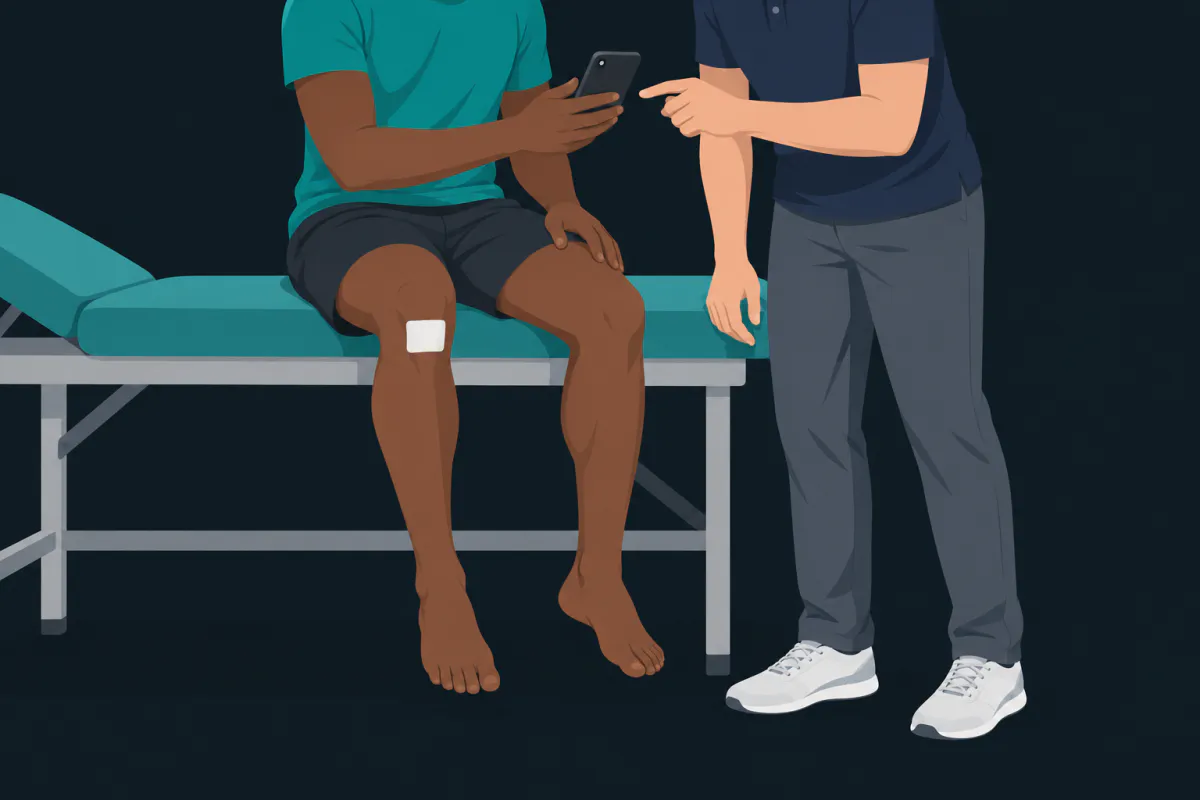
Range of motion is where a phone genuinely helps. Ockendon and Gilbert validated a smartphone accelerometer-based knee goniometer against a conventional one and found the phone reliable. Milanese and colleagues found both a smartphone app and a universal goniometer highly reliable for repeated flexion measurements, in the hands of experienced clinicians and of students alike. Those studies had someone else holding the phone, and measuring your own knee is noisier, but what home readings are for is a trend over weeks rather than a clinical-grade number. The method is written up separately in measuring knee flexion with your phone.
What to look for is logging that stores a number against a date, shows it as a trend, and lets you read it back without a subscription prompt. A pain entry that records where and when it hurt is worth more than a single daily score, and a number you can plot is worth more than free text.
Whether the programme can be changed
Nogueira and colleagues assessed 26 free apps aimed at knee pain using the Mobile App Rating Scale. The mean total score was 3.3 out of 5 and the mean subjective quality score 2.1 out of 5; most combined different types of exercise, and around six in ten paired exercise with pain education. Their conclusion was that the quality of these apps needs to improve, and that health professionals should be involved in building them so that content and progression recommendations are evidence-based. The review was about knee pain in general rather than ACL reconstruction, but the gap it describes — exercises without a defensible way of progressing them — is the one to check for.
In practice that comes down to whether the app bends. Your physiotherapist will quite likely want an exercise dropped, a different one added, or the sets and repetitions changed; a meniscus repair alongside the ligament can change the early weeks considerably. If the plan is fixed, you end up keeping two plans, theirs on paper and the app’s on the phone, and within a fortnight you will be using neither.
Where your data goes
Your surgery date, pain scores and range of motion are health data, and the ecosystem around them is not tidy. Tangari and colleagues examined 20,991 mobile health apps and found that 88% contained code capable of collecting user data, although only 3.9% were observed transmitting user information in their network traffic; most of the collection involved third-party services rather than the app’s own developer. Grundy and colleagues tested 24 top-rated medicines-related apps and found that 19 of them shared user data, describing the practice as routine but far from transparent, and identified a small number of commercial entities positioned to aggregate and potentially re-identify it.
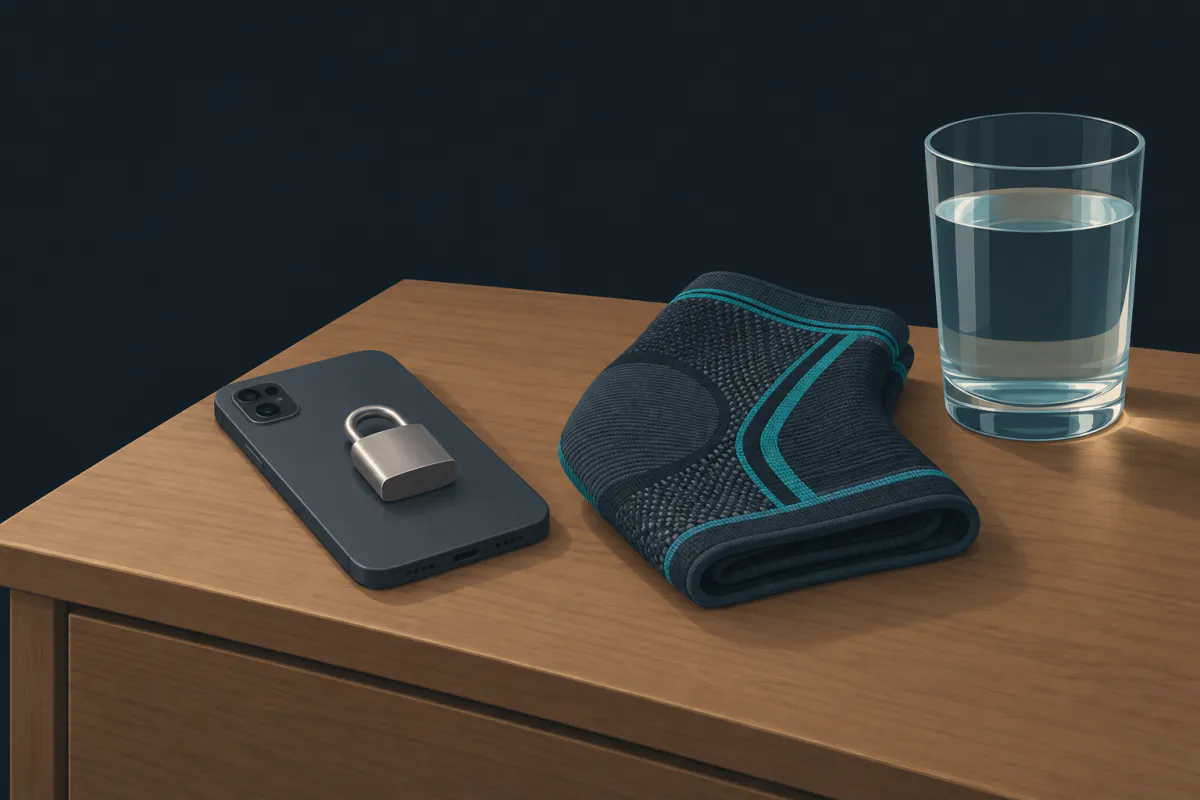
Neither study is about ACL rehabilitation, and neither says health apps are dangerous. What they justify is a question rather than an alarm: before you type your surgery date into something, check whether it needs an account, whether it works with the phone offline, what the store’s data safety section declares, and whether the privacy policy names who else receives anything.
Where our own app fits
Disclosure first: this site is published by the people who build ACL Recovery Tracker, so read this as a description rather than a recommendation, and put it through the same questions as anything else. It is a free ACL rehab app for iPhone and Android, built around ten levels with a progression checklist for each, a pain diary, mobility logging by hand or with the phone’s gyroscope, sessions whose exercises and targets you can edit, and a local database with no account behind it. What you can use it for on this topic is the comparison itself: the questions above are answerable about it in a few minutes, as they should be for any app.
Most people do well with whatever they will actually open on a Tuesday evening, which is a lower bar than the app stores imply and a harder one than it sounds. The thing worth protecting is the plan itself. An app that carries your physiotherapist’s programme, records what you did, and shows the two of you the trend is doing its job; one that quietly substitutes a schedule of its own is not.
The illustrations in this article were generated with AI.
Sources
- Sun, et al. Effectiveness of digital health technologies in postoperative rehabilitation following anterior cruciate ligament reconstruction: a systematic review and meta-analysis. Knee Surg Sports Traumatol Arthrosc. 2026;34:709-723.
- Lambert TE, Harvey LA, Avdalis C, et al. An app with remote support achieves better adherence to home exercise programs than paper handouts in people with musculoskeletal conditions: a randomised trial. J Physiother. 2017;63(3):161-167.
- van Melick N, et al. Evidence-based clinical practice update: practice guidelines for anterior cruciate ligament rehabilitation based on a systematic review and multidisciplinary consensus. Br J Sports Med. 2016;50:1506-1515.
- Grindem H, Snyder-Mackler L, Moksnes H, Engebretsen L, Risberg MA. Simple decision rules can reduce reinjury risk by 84% after ACL reconstruction: the Delaware-Oslo ACL cohort study. Br J Sports Med. 2016;50(13):804-808.
- Ockendon M, Gilbert RE. Validation of a novel smartphone accelerometer-based knee goniometer. J Knee Surg. 2012;25(4):341-345.
- Milanese S, et al. Reliability and concurrent validity of knee angle measurement: smart phone app versus universal goniometer used by experienced and novice clinicians. Man Ther. 2014;19(6):569-574.
- Nogueira FMF, Martins RP, Pereira Nery ECH, Silva AG. A systematic search and assessment of the quality and characterisation of free mobile applications targeting knee pain. Musculoskeletal Care. 2023;21(1):212-220.
- Tangari G, Ikram M, Ijaz K, Kaafar MA, Berkovsky S. Mobile health and privacy: cross sectional study. BMJ. 2021;373:n1248.
- Grundy Q, et al. Data sharing practices of medicines related apps and the mobile ecosystem: traffic, content, and network analysis. BMJ. 2019;364:l920.
- Noyes FR, Barber-Westin SD, eds. Noyes' Knee Disorders: Surgery, Rehabilitation, Clinical Outcomes. 2nd ed. Elsevier; 2017.
- NHS. ACL (anterior cruciate ligament) surgery: recovering.