The guide · Measuring progress, Strength
Limb symmetry index after ACL surgery
What the limb symmetry index measures, where the 90 per cent threshold came from, and why a good score can flatter a recovering knee.
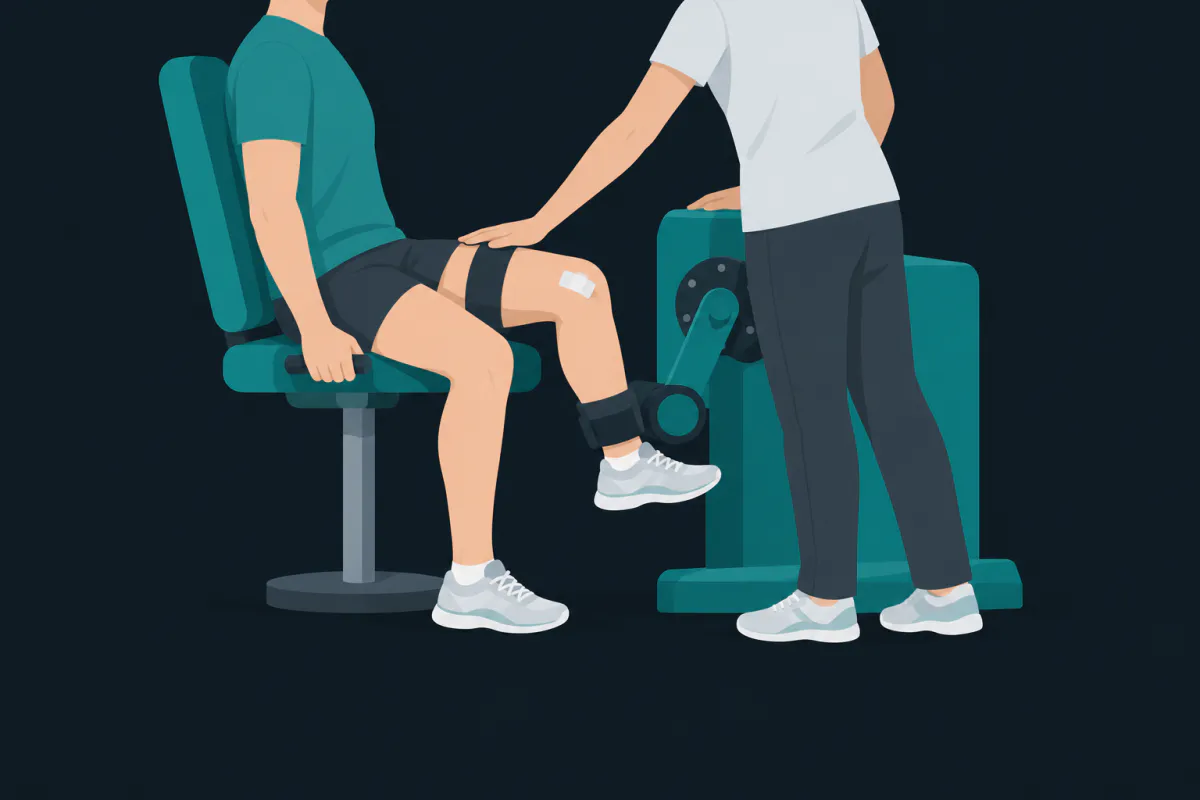
Somewhere around the gym months of an ACL rehabilitation programme, a physiotherapist starts quoting percentages at you. The quad is at 78 per cent. The hop is at 94. Those numbers are limb symmetry indexes, and from the middle of a rehabilitation onwards they carry a lot of weight in the decisions that follow.
What any particular percentage means for your knee is a question for the physiotherapist who took the measurement and the surgeon who did the operation, because the number only means something next to the rest of what they can see. What follows is what the index is, where its famous threshold came from, and the reasons researchers have grown wary of reading it on its own.
How the number is worked out
The limb symmetry index is a ratio. Something is measured on the operated leg, the same thing is measured on the other leg, the first is divided by the second and the result is expressed as a percentage. Ninety per cent means the operated leg produced nine-tenths of what the other one did. Above 100 is possible.
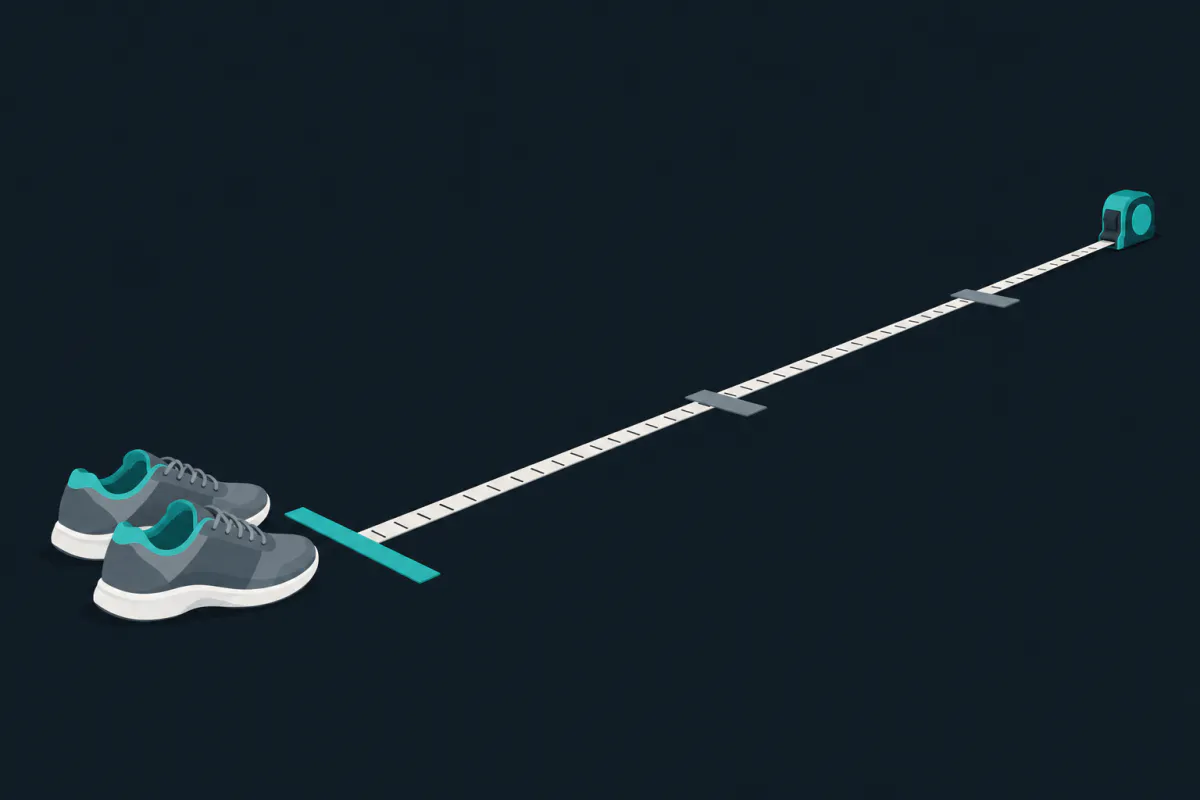
What gets measured is usually strength and hopping. Quadriceps strength is tested on a dynamometer, a machine that measures the force the leg produces against a fixed resistance, and hop distance in a small battery of single-leg tests — a single hop for distance, three hops in a row, three hops crossing a line, a timed hop over a set distance. Wellsandt and colleagues used quadriceps strength and four hop tests; the discharge testing Kyritsis and colleagues describe used isokinetic strength at three speeds, a running T-test and single, triple and triple crossover hops. Hamstring strength, and the hamstring-to-quadriceps ratio, often appear in the same report.
The attraction of the index is obvious. It needs no normative tables and no measurement from before the injury, which almost nobody has: your other leg is standing right there, with the same height, mass and training history as the injured one. Every weakness of the index follows from the same fact — the comparison is only as good as the leg on the bottom of the fraction.
Where 90 per cent came from
The threshold most protocols quote comes from cohorts that measured athletes before they went back to sport and then counted the injuries.
Grindem and colleagues followed 106 patients who played pivoting sports for two years after reconstruction in the Delaware-Oslo cohort. Passing their return-to-sport criteria meant scoring above 90 on quadriceps strength symmetry and hop test symmetry, plus two measures of self-reported knee function. Of those who failed, 38.2 per cent were reinjured; of those who passed, 5.6 per cent were — a reduction of 84 per cent in the reinjury rate. The same study found the reinjury rate fell by 51 per cent for each month return to sport was delayed up to nine months, with no further reduction after that, which is the origin of the nine-month figure discussed in when you can run again after ACL reconstruction. How often a second tear happens, and in whom, is covered in second ACL injury: how common and what lowers the risk.
Kyritsis and colleagues tested 158 male professional athletes before clearing them, using six discharge criteria. Twenty-six of them, 16.5 per cent, ruptured the graft, on average 105 days after returning. Athletes who had not met all six criteria had around four times the risk of rupture (hazard ratio 4.1, 95 per cent confidence interval 1.9 to 9.2), and a lower hamstring-to-quadriceps ratio in the operated leg was the other factor that stood out.
So the 90 is not a biological boundary. It is a cut-off that separated the reinjured from the uninjured reasonably well in these cohorts, inside test batteries that also asked about self-reported function, movement quality and time. The consensus guideline from van Melick and colleagues puts it in that context: criterion-based phases, a battery of strength, hop, movement-quality and psychological tests to move between them, and rehabilitation continuing for nine to twelve months. Noyes’ Knee Disorders, the textbook account of how this rehabilitation is structured, describes return-to-sport testing the same way — a set of measures, not a single one. The psychological test in that battery is usually the ACL-RSI questionnaire, described in fear of reinjury after ACL surgery.
Why a good score can flatter the knee
The sharpest criticism of the index is that the leg it compares against is not a healthy leg, and does not hold still.
Wellsandt and colleagues tested 70 athletes before reconstruction and six months after it. Forty of them, 57.1 per cent, reached 90 per cent symmetry on quadriceps strength and all four hop tests. But when the same six-month measurements were compared against the uninvolved leg as it had been before surgery — the authors’ estimate of each athlete’s own pre-injury capacity — only 20, 28.6 per cent, cleared 90 per cent. In other words, that leg’s pre-surgery scores were harder to match than its six-month ones. The pre-injury comparison was also the more sensitive of the two at predicting second ACL injuries.
Barbosa and colleagues found the denominator can move the other way as well. Tracking the uninvolved leg of professional and recreational male athletes through rehabilitation, they found its quadriceps and hamstring strength gradually increased, exceeding preoperative values by three months in the professionals and by six months in the recreational athletes, then levelling off. A leg doing most of the work and all of the gym programme gets stronger, and the index cannot distinguish an operated leg catching up from an unoperated leg running away.
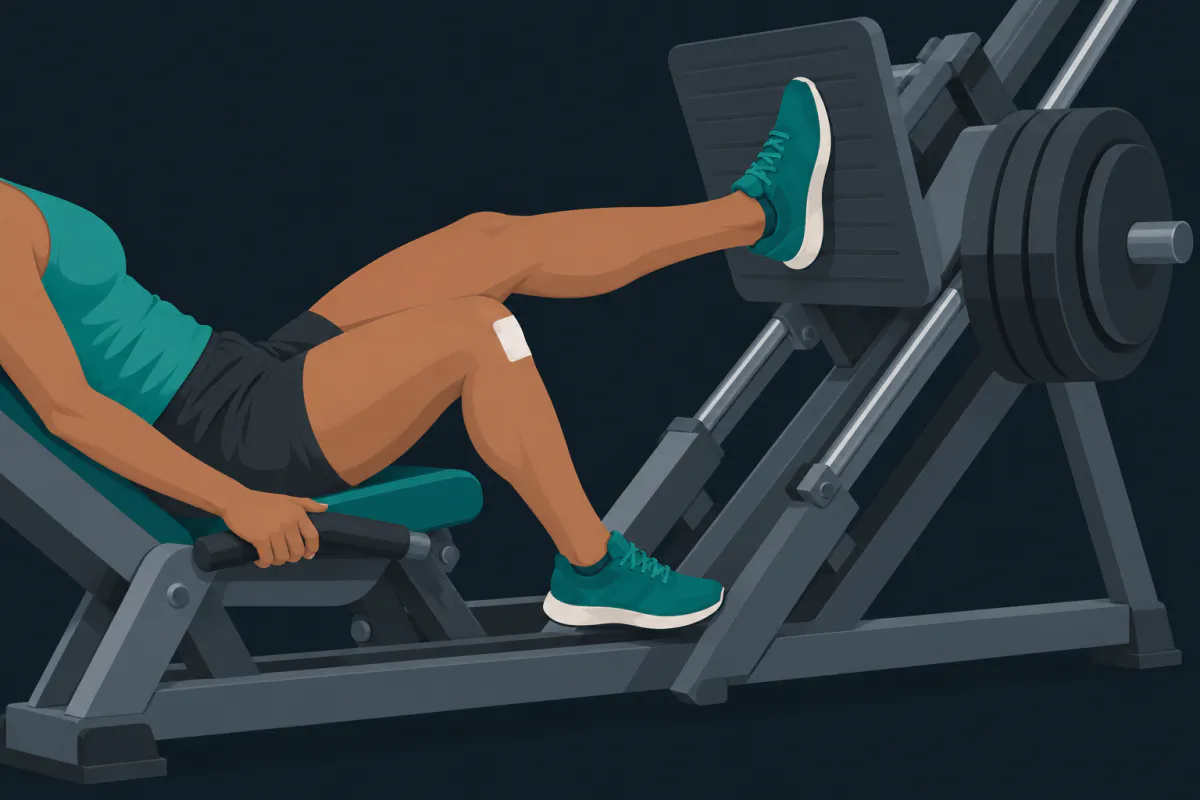
Which way the comparison leg moves evidently varies between cohorts. What the two studies agree on is that it moves, so a rising index does not by itself mean the gap between the knee you have and the knee you had is closing.
Symmetry is not the same as doing the job properly
A symmetrical result also says nothing about how the result was produced. Kotsifaki and colleagues measured athletes cleared to return to sport while they performed a single-leg hop for distance. Hop distance was 97 per cent symmetrical, give or take 4 per cent. The work done by the knee during the push-off was 69 per cent. The difference was made up elsewhere: more work through the hip, more hip flexion, more forward tilt of the pelvis and trunk. The leg covered the distance by using itself differently.
This is why guidelines have moved towards reading symmetry alongside absolute numbers. The Aspetar clinical practice guideline recommends restoring absolute strength values — preoperative figures where they exist, and normative values for the sport and level of activity — rather than treating a ratio as sufficient, and sets its symmetry expectations higher for high-demand pivoting sports than for the earlier stages of rehabilitation. Tests of how a movement is performed, not only how far, sit beside the percentages for the same reason.
None of which makes the index useless. It is cheap, repeatable, and it predicted reinjury in two large cohorts; it is a measurement with known blind spots, and the people who use it well know where those are. If your own numbers have been quoted without that context, what the absolute values are is a reasonable thing to ask.
Where the app fits
Symmetry testing happens in a clinic, with equipment, and no phone app can do it. What a phone holds is the record between those appointments. Our free ACL tracker for iOS and Android, ACL Recovery Tracker, states the criteria for its gym levels as loads relative to your own body weight and rep counts rather than as percentages of the other leg — a single-leg leg press at 1.25 times body weight for ten reps, a side plank held for 90 seconds on each side — which you tick off in the progression checklist yourself; the healthy-leg baseline it stores is for extension and flexion in degrees. Alongside the sessions you log and the pain diary, that gives you something concrete to bring to the appointment where the percentages are measured.
The index is one of several things a clinician looks at, and the one most easily misread by the person it is quoted to. A climbing percentage is encouraging. It is also, on its own, compatible with a leg that has not got much stronger and a knee that is quietly letting the hip do the work. The judgement about what your own numbers mean belongs to the people who can also watch you move, and distinguishing a hard session from a problem is its own question, covered in pain versus a setback in ACL rehab.
The illustrations in this article were generated with AI.
Sources
- Wellsandt E, Failla MJ, Snyder-Mackler L. Limb symmetry indexes can overestimate knee function after anterior cruciate ligament injury. J Orthop Sports Phys Ther. 2017;47(5):334-338.
- Grindem H, Snyder-Mackler L, Moksnes H, Engebretsen L, Risberg MA. Simple decision rules can reduce reinjury risk by 84% after ACL reconstruction: the Delaware-Oslo ACL cohort study. Br J Sports Med. 2016;50(13):804-808.
- Kyritsis P, Bahr R, Landreau P, Miladi R, Witvrouw E. Likelihood of ACL graft rupture: not meeting six clinical discharge criteria before return to sport is associated with a four times greater risk of rupture. Br J Sports Med. 2016;50(15):946-951.
- Barbosa O, Kotsifaki R, Whiteley R, King E, Korakakis V. Beware of the "moving target": uninvolved limb strength increases to exceed preoperative values during rehabilitation after ACL reconstruction in male professional and recreational athletes. J Orthop Sports Phys Ther. 2024;54(4):1-10.
- Kotsifaki A, et al. Single leg hop for distance symmetry masks lower limb biomechanics: time to discuss hop distance as decision criterion for return to sport after ACL reconstruction? Br J Sports Med. 2022;56(5):249-256.
- Kotsifaki R, Korakakis V, King E, et al. Aspetar clinical practice guideline on rehabilitation after anterior cruciate ligament reconstruction. Br J Sports Med. 2023;57:500-514.
- van Melick N, et al. Evidence-based clinical practice update: practice guidelines for anterior cruciate ligament rehabilitation based on a systematic review and multidisciplinary consensus. Br J Sports Med. 2016;50:1506-1515.
- Noyes FR, Barber-Westin SD, eds. Noyes' Knee Disorders: Surgery, Rehabilitation, Clinical Outcomes. 2nd ed. Elsevier; 2017.