The guide · Timeline, Return to sport
Why do ACL guidelines say nine months?
Nine months comes from two cohort studies of reinjury, not from a graft that heals on a set date. It is a floor for pivoting sport, not proof of readiness.
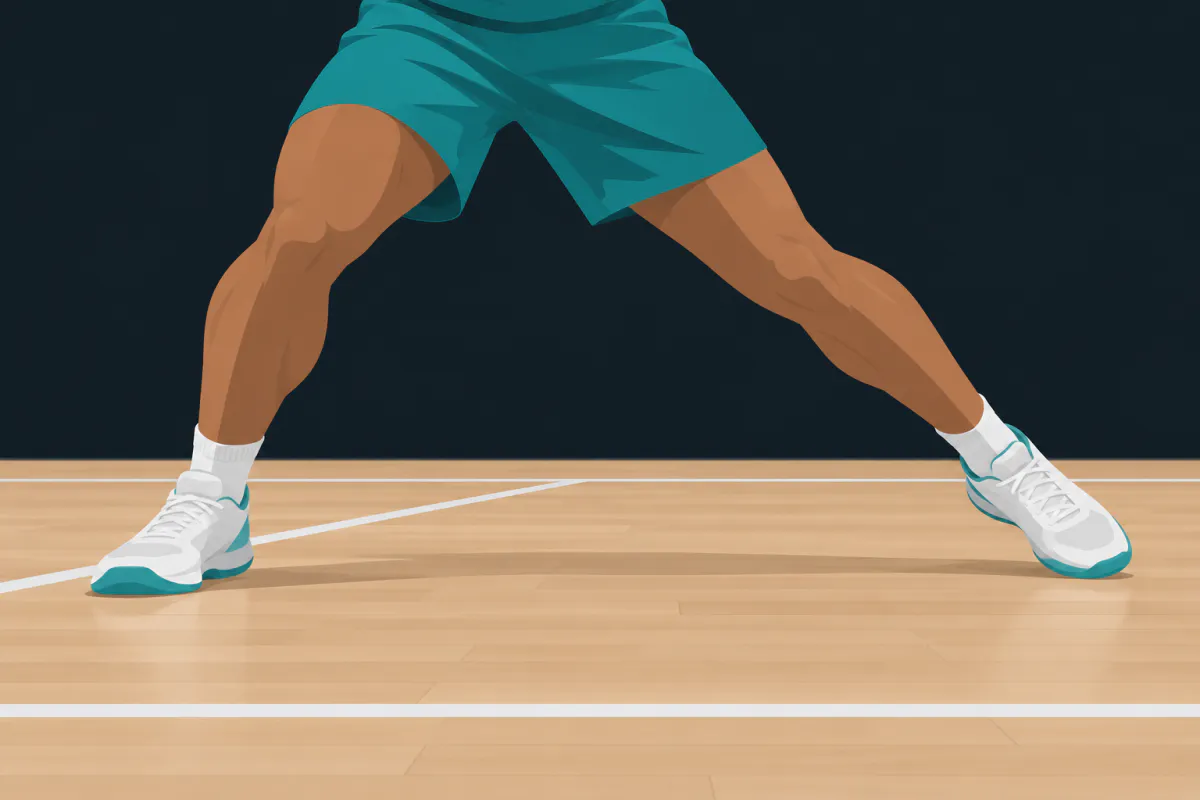
The short answer: nine months comes mostly from two cohort studies of people going back to demanding sport. In one, the reinjury rate fell by 51 per cent for each month that return was delayed, up to nine months after surgery, and then stopped falling; in the other, athletes who returned before nine months had about seven times the rate of a second ACL injury. No study has found that the graft is healed on a particular date, so nine months is best read as a minimum for pivoting sport, to be met together with strength and hop tests, not as the day you are ready. When you go back is decided with your surgeon and physiotherapist; this article explains where the number comes from, not what your knee can do.
The two studies behind the number
Grindem and colleagues followed 106 people who played pivoting sports, the ones with cutting, jumping and sudden stops, in the Delaware-Oslo cohort, and recorded their sport and any knee reinjury every month for two years. Its results made the number famous. The reinjury rate dropped by 51 per cent for every month that return to sport was delayed, until nine months after surgery. After nine months, waiting longer brought no further reduction in their data. More symmetrical quadriceps strength before returning was also linked to fewer reinjuries.
Beischer and colleagues came at it from another direction. They studied 159 athletes aged 15 to 30, most of them women, who had gone back to knee-strenuous sport after an ACL reconstruction. Those who returned before nine months had about seven times the rate of a second ACL injury of those who waited. In that cohort, unlike Grindem’s, symmetrical strength and hop results at return were not linked to a lower rate.
Both studies are observational. They show that returning early went with getting hurt again; they cannot prove that the extra months caused the protection. People who return early may differ in other ways too, in the sport they play or in how hard they push. Still, two independent cohorts pointing at the same month is why the figure travelled.
Nine months in the guidelines
Many published studies cleared people earlier. Burgi and colleagues reviewed 209 studies that reported how athletes were cleared to return to sport after a primary ACL reconstruction. Time since surgery was a criterion in 85 per cent of them and the only criterion in 42 per cent, and over 80 per cent of the studies allowed a return before nine months. By that measure, nine months is stricter than much of what those studies described.
The Dutch clinical practice guideline, written by van Melick and colleagues from a systematic review and a multidisciplinary consensus, recommends that rehabilitation after the operation continues for 9 to 12 months. It sets out three postoperative phases that are passed on criteria: strength and hop tests, quality of movement and psychological tests, not the calendar alone. The months and the tests are meant to work together. The longer account of how the tests are used is in the article on return to sport.
What the graft is doing in that time
It would be tidy if nine months were the day the graft became a ligament. The evidence does not say that. The tendon used as the graft goes through a process called ligamentization: it is remodelled, step by step, into a structure that resembles a ligament. Claes and colleagues reviewed the studies that took biopsies of the graft from living patients. They found only four, none of high quality. The grafts stayed alive throughout, and mature ones could look like a normal ACL under the microscope, though differences in the collagen fibres remained. The studies described stages of the process but did not agree on how long each one lasts.
So the number comes from what happened to people, not from a biological clock. That is also why the guideline gives a range and the studies a threshold, rather than an exact date.
What the number does not tell you
Nine months is a floor, not proof of readiness. In Grindem’s cohort the date was one rule among several; the same paper linked stronger, more symmetrical quadriceps to fewer reinjuries. A knee that is still swollen, weak or unsure at nine months has met the calendar and nothing else.
Passing tests is not proof either. Webster and Hewett pooled 18 studies of return-to-sport test batteries and found that only 23 per cent of patients passed them. Passing went with a lower risk of graft rupture, but not with a lower risk of all further ACL injuries, and it went with a higher risk of injuring the ACL of the other knee. Their conclusion was that the tests in use have not been shown to do everything asked of them.
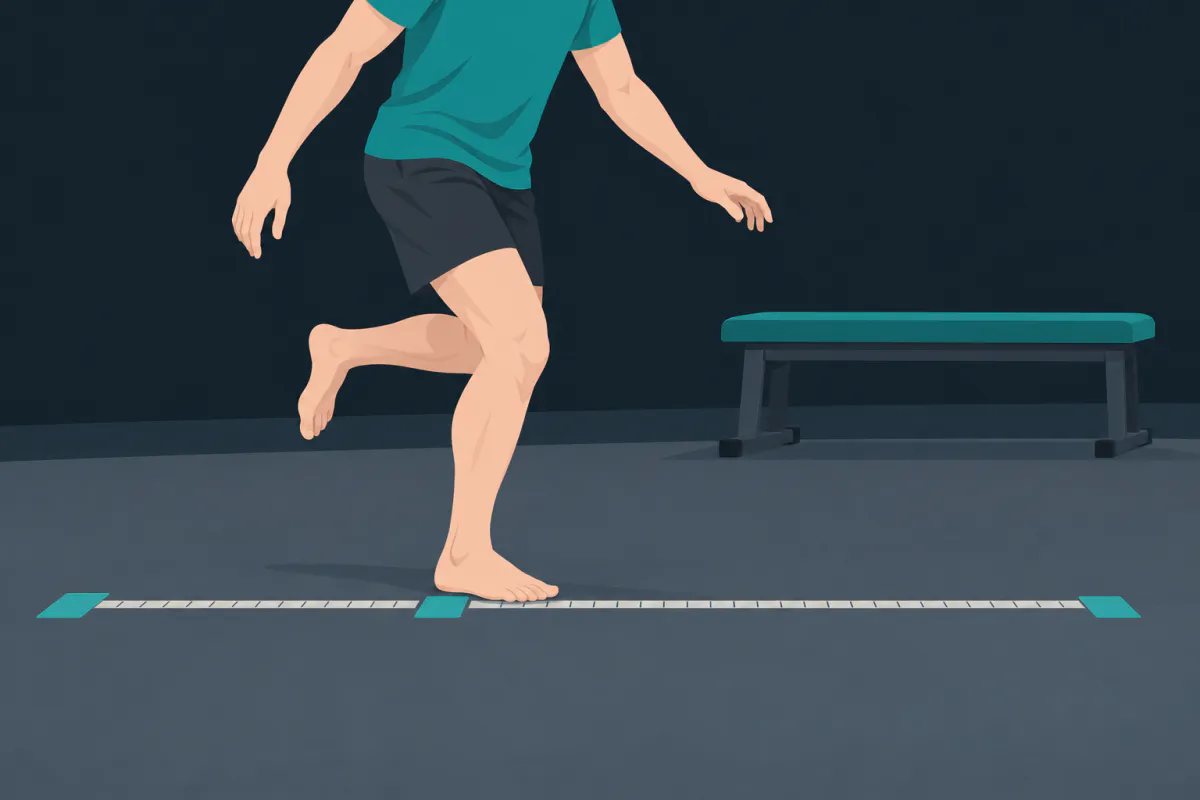
Some researchers think nine months is too early. Nagelli and Hewett reviewed evidence that the risk of a second ACL injury is highest in the first two years after surgery, and higher in the first year than in the second, especially in young, active athletes. They argue that joint health and function return to baseline at about two years, and propose that waiting nearly that long would lower second injuries. That is a hypothesis, not a guideline. How common a second injury is, and who is most at risk, is covered in the article on second ACL injuries.
And the studies were about demanding sport: pivoting sport in Grindem’s cohort, knee-strenuous sport in Beischer’s. A return to running, cycling or a gym routine is a different question, usually answered months earlier and on its own criteria.
Where the app fits
ACL Recovery Tracker, a free ACL rehab app for iOS and Android, treats the nine months as one line on a longer list. Level 10, cutting and sport, typically starts around week 39, and its progression checklist includes a minimum of nine months since surgery next to hop tests at 90 per cent of the other leg, full knee motion, no swelling and clearance from a clinician who specialises in ACL rehabilitation. You tick the checklist yourself; the app does not test the knee or decide that you are ready. You can use it to keep the record you bring to that conversation: the sessions done, the pain diary after the harder drills and your measurements against the healthy-leg baseline.
Nine months has become shorthand for “not before”, and the research behind it supports that reading. It does not support treating the date as a finish line. The month you go back is decided by what the knee can do, with the calendar setting the earliest it might be.
The illustrations in this article were generated with AI.
Sources
- Grindem H, Snyder-Mackler L, Moksnes H, Engebretsen L, Risberg MA. Simple decision rules can reduce reinjury risk by 84% after ACL reconstruction: the Delaware-Oslo ACL cohort study. Br J Sports Med. 2016;50(13):804-808.
- Beischer S, Gustavsson L, Senorski EH, et al. Young athletes who return to sport before 9 months after anterior cruciate ligament reconstruction have a rate of new injury 7 times that of those who delay return. J Orthop Sports Phys Ther. 2020;50(2):83-90.
- van Melick N, van Cingel RE, Brooijmans F, et al. Evidence-based clinical practice update: practice guidelines for anterior cruciate ligament rehabilitation based on a systematic review and multidisciplinary consensus. Br J Sports Med. 2016;50(24):1506-1515.
- Burgi CR, Peters S, Ardern CL, et al. Which criteria are used to clear patients to return to sport after primary ACL reconstruction? A scoping review. Br J Sports Med. 2019;53(18):1154-1161.
- Claes S, Verdonk P, Forsyth R, Bellemans J. The "ligamentization" process in anterior cruciate ligament reconstruction: what happens to the human graft? A systematic review of the literature. Am J Sports Med. 2011;39(11):2476-2483.
- Webster KE, Hewett TE. What is the evidence for and validity of return-to-sport testing after anterior cruciate ligament reconstruction surgery? A systematic review and meta-analysis. Sports Med. 2019;49(6):917-929.
- Nagelli CV, Hewett TE. Should return to sport be delayed until 2 years after anterior cruciate ligament reconstruction? Biological and functional considerations. Sports Med. 2017;47(2):221-232.