The guide · Pain and swelling, Early recovery
Ice, elevation and compression after ACL surgery
What the trials found when ice, cold devices and compression were tested after ACL reconstruction, and how the three are usually applied at home.
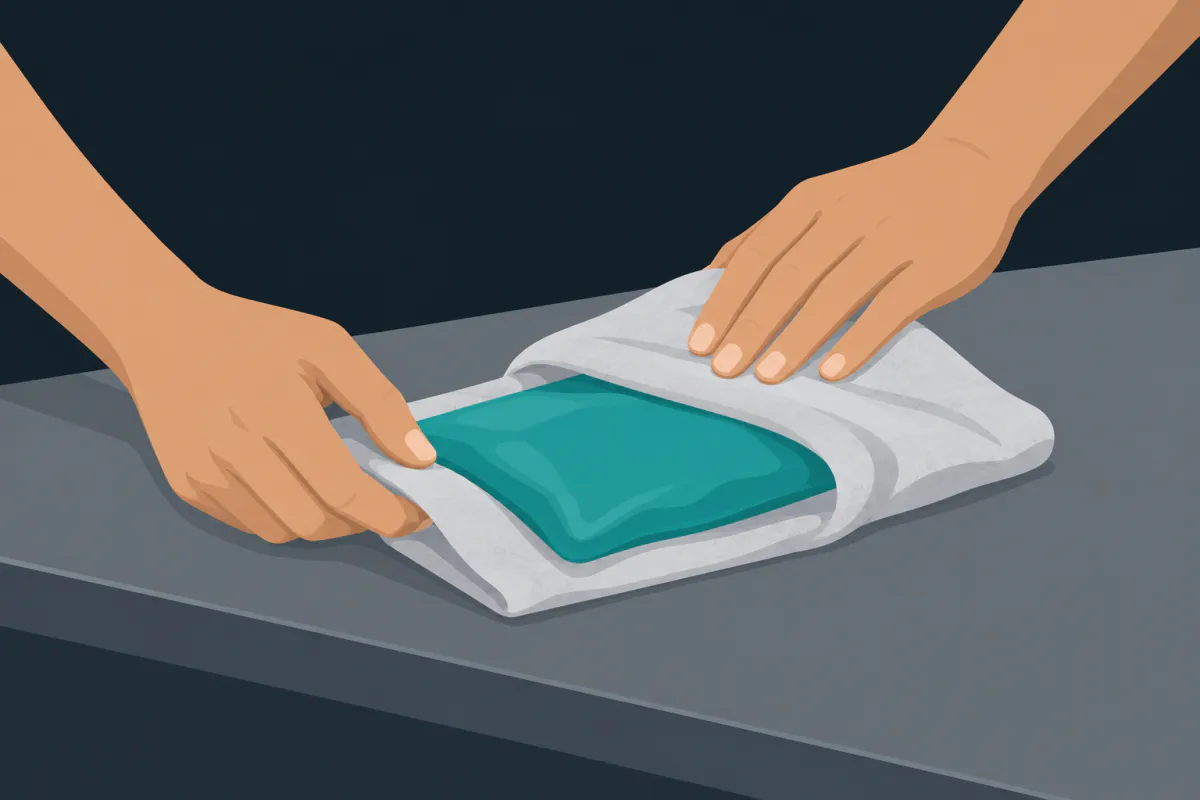
Ice the knee, keep the leg up, wear the wrap. Almost everyone leaves hospital after an ACL reconstruction with some version of those three instructions and very little detail about what they are for. The research behind them is narrower than the confidence of the instruction suggests, and more specific: it says fairly clearly what each measure changes and what it does not.
Your surgeon and physiotherapist decide what applies to your knee, including how long to cool it, whether to wear compression at all and what to do if the leg is not settling. What follows is general information about what was found when these measures were tested after this particular operation. Why the knee fills with fluid in the first place is covered in how to reduce swelling after ACL surgery.
What ice was found to do
Cryotherapy — an ice pack, a gel pack, or a machine circulating chilled water through a cuff — is the most studied of the three, and the studies agree with each other more than the advice around them does.
Raynor and colleagues pooled seven randomised trials comparing cryotherapy with no cryotherapy after ACL reconstruction. Pain was significantly lower with cold. Wound drainage and range of motion were no different. Martimbianco and colleagues, reviewing trials of cryotherapy after arthroscopic ACL reconstruction, reached the same shape of conclusion — a benefit for postoperative pain, none for range of motion or drainage — and added that the trials were small and varied enough in method that the findings should be held loosely. The consensus rehabilitation guideline from van Melick and colleagues summarises the position as pain relief immediately after application, up to about a week after surgery, with no effect on drainage or range of motion.
So cold is a painkiller you apply to the outside of the knee. In the first fortnight, when pain is what interrupts sleep and makes the exercises harder to face, that is worth having. What it is not is a way of emptying fluid out of the joint, which is why the knee can measure exactly the same after twenty minutes of icing as it did before.
There is a wider argument you will meet online. Dubois and Esculier, in the British Journal of Sports Medicine, questioned the place of ice in soft-tissue injury care, arguing that its benefit is mainly pain relief and that suppressing inflammation may not help tissue heal. That debate is about acute injuries rather than surgery, and the trials above measured pain, drainage and movement rather than how a graft matures, so none of it is a reason to do something other than what your team asked for.
Is it the cold, or the squeeze?
One older trial is worth knowing about because it separated the two ingredients. Dervin, Taylor and Keene randomised 78 people having an ACL reconstruction to the same compression cuff, filled either with ice water or with room-temperature water. Wound drainage, pain at 24 hours, painkiller requirements and time to discharge came out the same in both groups. The authors concluded that the compression part of a cold-and-compression dressing may be the more influential half.
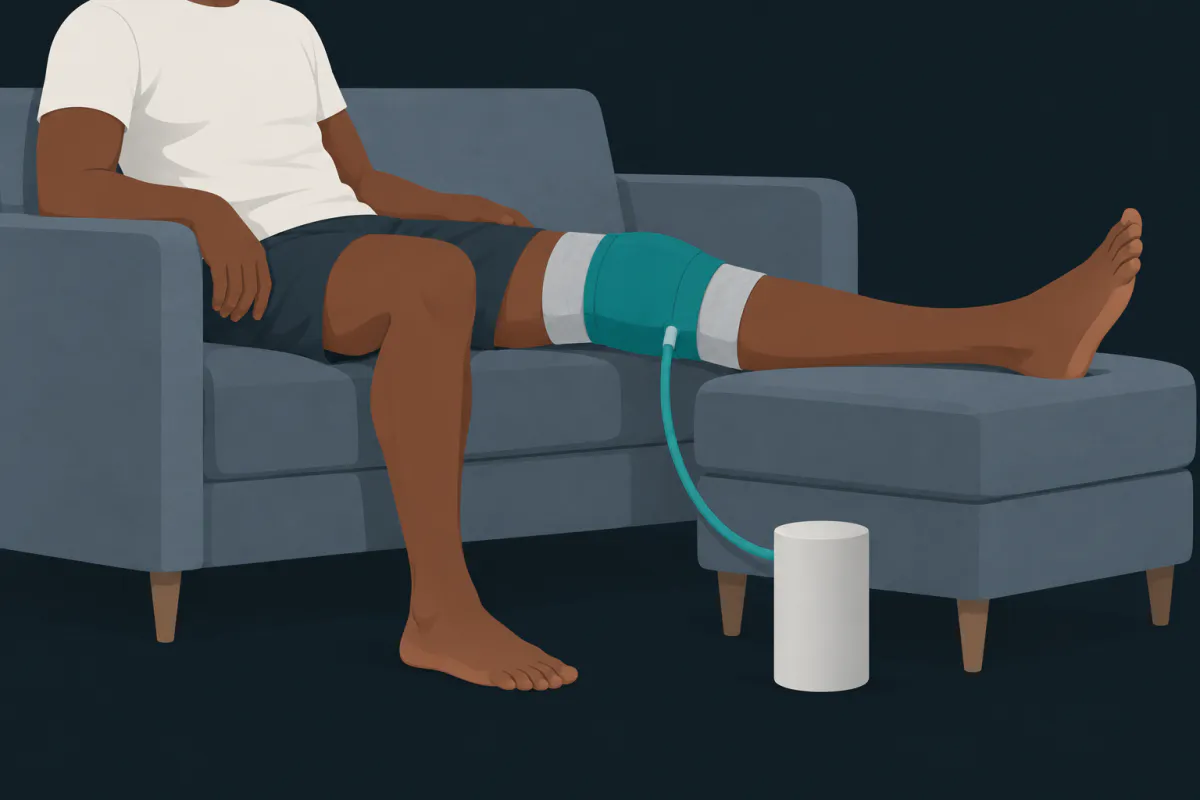
Later work points the other way rather than confirming it, and the question is unsettled. Waterman and colleagues randomised patients after ACL reconstruction to a cryotherapy-and-compression device or a standardised ice pack, both used three times a day: 83 per cent of the device group had stopped taking opioid painkillers by six weeks, against 28 per cent of the ice-pack group. Yang and colleagues compared a cryopneumatic compression device with standard ice packs after arthroscopic reconstruction and reported lower pain scores and less joint effusion in the early postoperative period.
Devices, on that evidence, beat a bag of ice for early comfort. Waterman’s trial also found no difference between the groups in knee function scores or in the measured circumference of the knee. For anyone weighing the cost of hiring a machine, that is the summary — a plausibly easier fortnight, and no sign of a different knee at the end of it.
How cold is applied, and the part about skin
Protocols differ in almost every detail: how many minutes, how often, for how many weeks, and with what. The trials above used schedules as varied as their devices, which is part of why none of them yields a single instruction. The mechanics are more consistent than the schedules. The NHS’s general advice for a sprain or strain is an ice pack, or a bag of frozen vegetables, wrapped in a tea towel and applied for up to 20 minutes every two to three hours. The wrapping and the clock are not fussiness. Skin held at cold temperatures for too long can be injured, and the nerves that run close to the surface at the knee can be affected too; Martimbianco’s review found adverse events rare, which describes cryotherapy applied as instructed rather than a pack left on while you fall asleep. After this operation many people also have a patch of numb skin beside the scar — the subject of numbness beside the scar — so the usual warning that skin is getting too cold may not arrive.
The one part of the familiar RICE formula that does not carry over from a sprain is rest. Rehabilitation after a reconstruction is built the other way round: the van Melick guideline has the knee moving and the leg loading within days, and the NHS’s own recovery advice for this surgery is about getting up and about rather than keeping the leg still.
Some symptoms are not swelling at all, and the standard list of reasons to contact your surgical team, your GP or an urgent care service the same day is short:
- a calf that is hot, red, swollen or painful
- a fever, or spreading redness or discharge at the incision
- new weakness or numbness in the foot
- a knee that locks and cannot be moved
Elevation and compression, where the evidence thins
Elevation has the least direct evidence behind it and attracts the least argument. The mechanism is gravity, and it only works above the level of the heart, which means the whole leg supported from calf to ankle rather than a foot on a coffee table. Trials testing elevation on its own after ACL reconstruction are essentially absent: it appears in guidelines as part of early care rather than as something separately proven, which is worth stating plainly.
How the leg is propped matters more than how high. Support under the heel leaves the knee free to settle straight, while a pillow under the knee holds it bent. Noyes’ Knee Disorders, the reference text for how these programmes are structured, sets out the reasoning most protocols follow: extension is protected from the first days rather than recovered later, because a knee that loses it is hard to straighten afterwards.
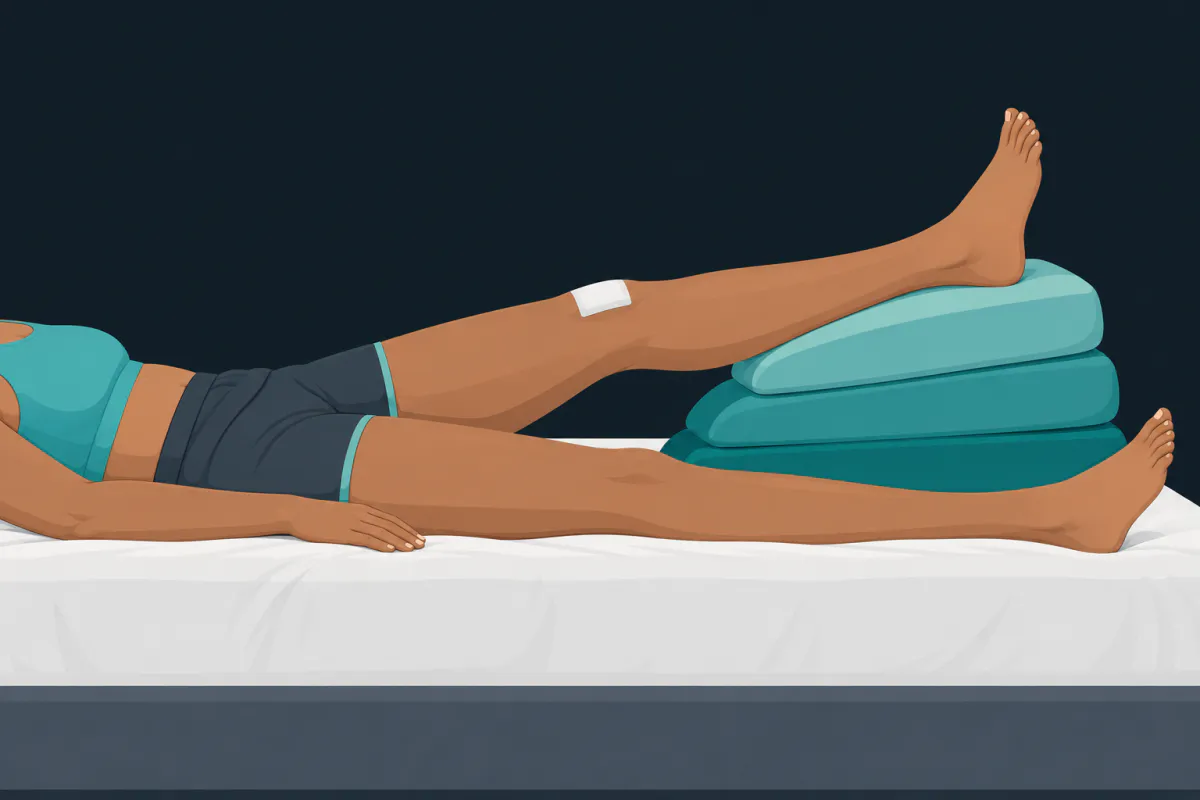
Compression arrives as an elastic wrap, a stocking, or the inflatable cuff of a cold device, and how long it stays on is a question for whoever fitted it. Dervin’s trial is the reason not to treat it as the junior partner of the pair.
Where the app fits
Ice and elevation are unusual among rehabilitation tasks: the hard part is remembering them several times a day, not performing them. Our free ACL rehab app schedules them as care routines — “Ice the knee” and “Elevate the leg” — with a few slots a day at the early levels, times you can move, and a reminder per slot that goes quiet once you tick it off. It is a free ACL tracker for iOS and Android, and here you can use it as the checklist for those slots while logging pain from 0 to 10, which is the outcome the trials actually found cold to change.
None of these three measures is the reason a knee gets better, and none of them is quick. They make the first weeks more bearable, and bearable weeks are the ones in which the exercises get done, which is where the recovery is. If the leg is swelling more rather than less as the weeks pass, that is a conversation with your physiotherapist rather than a reason to ice for longer.
The illustrations in this article were generated with AI.
Sources
- Raynor MB, Pietrobon R, Guller U, Higgins LD. Cryotherapy after ACL reconstruction: a meta-analysis. J Knee Surg. 2005;18(2):123-129.
- Martimbianco ALC, et al. Effectiveness and safety of cryotherapy after arthroscopic anterior cruciate ligament reconstruction. A systematic review of the literature. Phys Ther Sport. 2014;15(4):261-268.
- Dervin GF, Taylor DE, Keene GC. Effects of cold and compression dressings on early postoperative outcomes for the arthroscopic anterior cruciate ligament reconstruction patient. J Orthop Sports Phys Ther. 1998;27(6):403-406.
- Waterman B, Walker JJ, Swaims C, et al. The efficacy of combined cryotherapy and compression compared with cryotherapy alone following anterior cruciate ligament reconstruction. J Knee Surg. 2012;25(2):155-160.
- Yang JH, Hwang KT, Lee MK, Jo S, Cho E, Lee JK. Comparison of a cryopneumatic compression device and ice packs for cryotherapy following anterior cruciate ligament reconstruction. Clin Orthop Surg. 2023;15(2):234-240.
- Dubois B, Esculier JF. Soft-tissue injuries simply need PEACE and LOVE. Br J Sports Med. 2020;54(2):72-73.
- van Melick N, et al. Evidence-based clinical practice update: practice guidelines for anterior cruciate ligament rehabilitation based on a systematic review and multidisciplinary consensus. Br J Sports Med. 2016;50:1506-1515.
- Noyes FR, Barber-Westin SD, eds. Noyes' Knee Disorders: Surgery, Rehabilitation, Clinical Outcomes. 2nd ed. Elsevier; 2017.
- NHS. Sprains and strains.
- NHS. ACL (anterior cruciate ligament) surgery: recovering.