The guide · Pain and swelling, Early recovery
How to reduce swelling after ACL surgery
Why the knee fills with fluid, what ice, elevation and compression actually did in the trials, and how swelling is measured and used to pace rehabilitation.
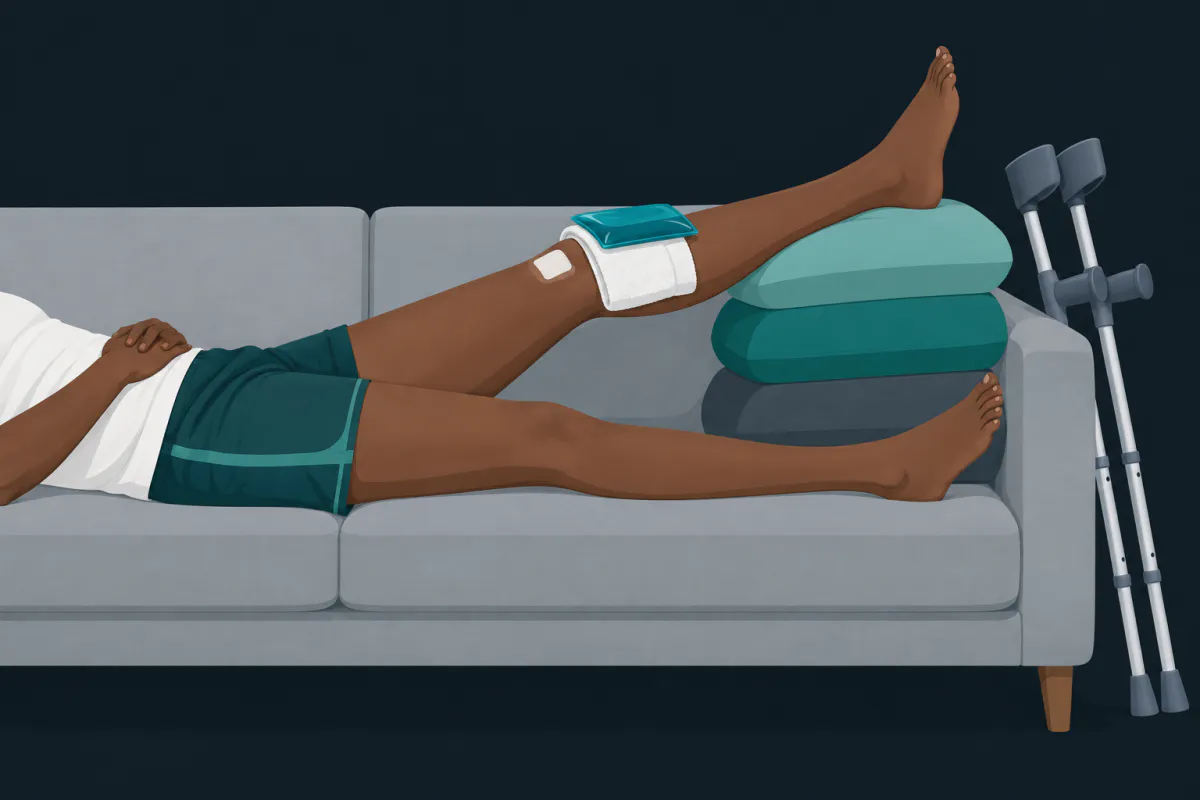
A swollen knee is the first thing most people notice after an ACL reconstruction and the thing they are given the least detail about. Ice, elevate, compress, keep it up: the instructions are familiar, but what they are actually doing, and how much of it the research supports, is rarely explained. This article covers why the knee swells, what the swelling does to the rest of your rehabilitation, and what the trials show about the usual measures.
Your surgeon’s and physiotherapist’s instructions come first, including how long to ice, whether to wear compression and how much to move. Nothing here replaces them.
Why the knee swells, and for how long
Two different things get called swelling. The first is an effusion: fluid inside the knee joint itself, which makes the joint feel tight, warm and full, and makes bending feel like the knee has reached a wall before it has. The second is swelling of the soft tissues around the joint, which is puffiness you can press with a finger, along with bruising that often tracks down the shin over the first week as gravity moves it.
Both are expected. The operation drills tunnels through bone, takes a graft from somewhere, and leaves an inflammatory response behind it. How long the fluid takes to settle varies a great deal and is not something a calendar predicts well: it usually reduces over the early weeks, but a knee that has been quiet for a month can puff up again after a longer walk or a harder session.
Rehabilitation guidelines treat this as core early business rather than a side effect to wait out. The consensus guideline from van Melick and colleagues sets out the first postoperative phase around a small number of goals: reducing swelling and pain, regaining full extension, restoring quadriceps control, and normalising walking. Swelling sits at the top of that list because of what it does to the other three.
What the swelling does to the rest of the knee
The mechanism has been demonstrated directly. Spencer and colleagues injected small increments of saline into the knees of healthy volunteers, up to sixty millilitres, and measured the electrical response of the quadriceps. As the volume inside the joint rose, so did the pressure, and the muscle’s reflex response fell in proportion. Fluid inside a joint reduces the nervous system’s ability to drive the muscle across it. That is the clearest illustration of arthrogenic muscle inhibition, the reason a thigh can refuse to contract after surgery despite the muscle itself being intact.
How strongly that translates to real patients is less dramatic than the laboratory work suggests, and it is worth being honest about. A 2025 study in the Journal of Athletic Training measured effusion with ultrasound in people before and around sixteen weeks after ACL reconstruction. Effusion size showed no relationship with quadriceps strength or activation after the injury itself, and after reconstruction only a small relationship with activation, none with strength. The authors concluded that studies using artificially created effusions have probably overstated the effect. Swelling is worth controlling, in other words, but a knee that is still a little full is not evidence that the quadriceps work is being wasted.
Swelling also works against extension. A joint under pressure is most comfortable slightly bent, which is exactly the position a knee should not settle into. Noyes’ Knee Disorders sets out the reasoning that most protocols follow here: extension is protected from the first days rather than recovered later, because a knee that loses it is difficult to straighten afterwards. Propping the leg with support under the heel rather than under the knee keeps the joint straight while it is elevated, and most early protocols ask for that combination for exactly that reason.
What ice, elevation and compression actually do
Cryotherapy, meaning ice or a cold device, is the most studied of the three, and the results are narrower than its reputation. The van Melick guideline concluded that cryotherapy reduces pain immediately after it is applied, up to about a week after surgery, with no effect on postoperative drainage or range of motion. Martimbianco and colleagues, reviewing trials of cryotherapy after arthroscopic ACL reconstruction, similarly found reduced pain around forty-eight hours after surgery compared with no cryotherapy, and no trial showing a range-of-motion benefit; they noted the trials were small and varied in method, which limits how firmly any of it can be stated.
Read together, that is a real but modest benefit, and it is mostly about comfort. Ice is not established as a way of emptying fluid out of the joint. That is not an argument against using it, since pain control in the first fortnight matters on its own, but it does explain why the knee can look no smaller after an icing session.
Elevation and compression have much less direct trial evidence in this specific operation, and protocols differ on both. Elevation only works above the level of the heart, which usually means the whole leg supported from calf to ankle rather than a foot propped on a stool. Compression arrives as a wrap, a stocking or a cold device that inflates, and how long it stays on is a question for the team that fitted it.
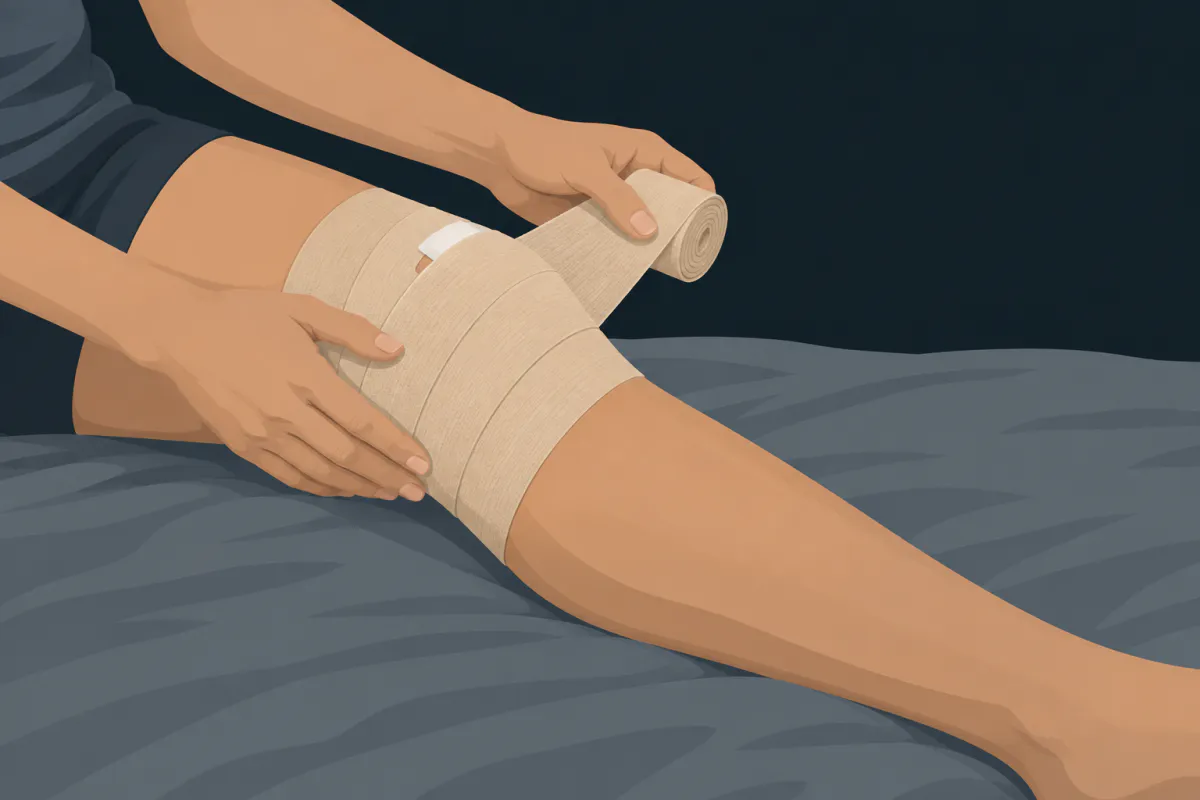
One safety note applies to all cold applications. Skin cooled for too long can be injured, which is why instructions specify a number of minutes and a layer between the pack and the skin. After this surgery many people have a numb patch beside the scar, so the usual warning signal of skin getting too cold may not arrive.
How swelling is measured, and how it paces rehabilitation
Physiotherapists grade effusion with a stroke test, sweeping fluid up the inner side of the knee and watching how it returns. Sturgill and colleagues tested a five-point version of that scale between clinicians in an outpatient clinic and reported a kappa of 0.75 with 73% exact agreement, which is why the grades appear in progression criteria rather than being treated as an impression. A tape measure around the kneecap, compared with the other leg, is the cruder version of the same idea.
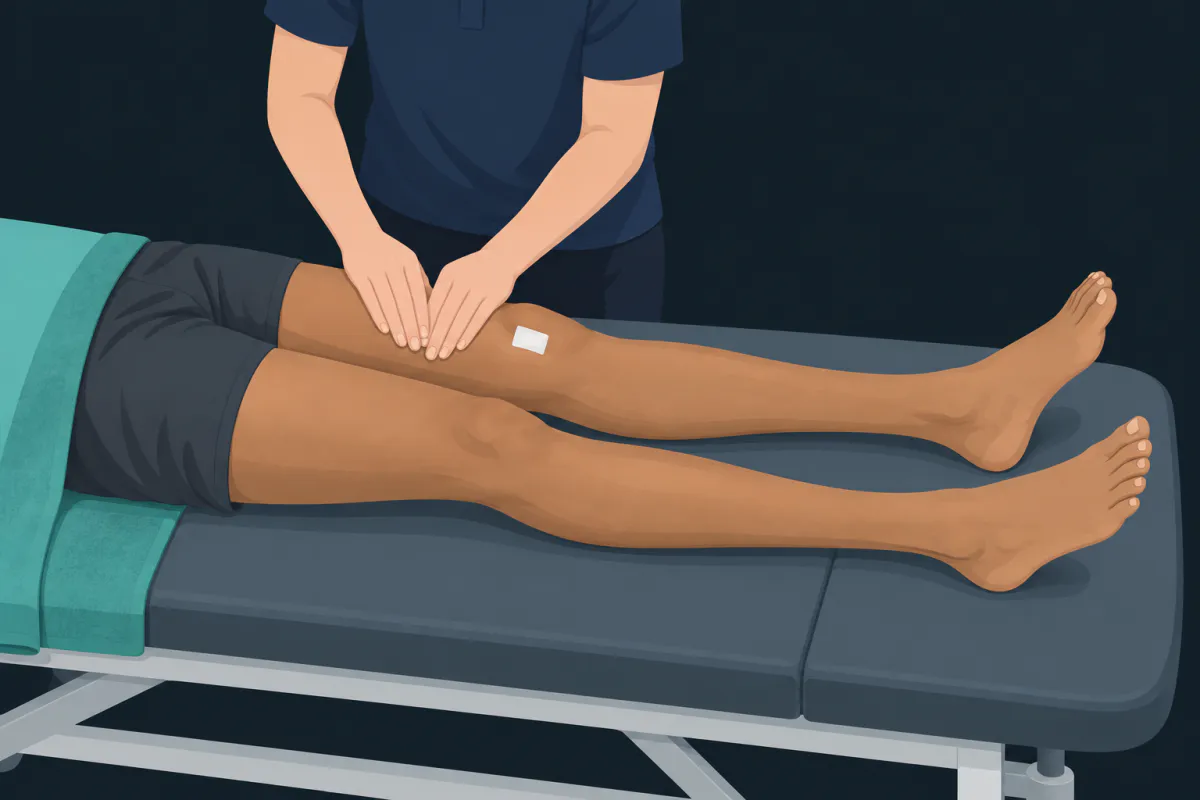
Those grades then act as gates. In the criterion-based progression published by Adams and colleagues, an effusion of trace or less is listed among the conditions to be met before running begins, alongside a quadriceps index of at least 80%. The same logic runs day to day: a knee that swells more after a session is generally read as a sign that the session was too much for it, and the programme is scaled back rather than pushed through. That judgement belongs to your physiotherapist, who can compare what the knee is doing now with what it was doing last week.
When swelling is not just swelling
Some symptoms are not part of the expected picture. The NHS recovery guidance lists the standard warning signs after this surgery: a calf that is hot, red, swollen or painful, or new shortness of breath or chest pain, which can indicate a blood clot; spreading redness at the incision, discharge from the wound or a fever; new weakness or numbness in the foot; and a knee that locks and cannot be moved. Any of those means contacting your surgical team, your GP or an urgent care service the same day rather than waiting for the next appointment.
Keeping a record of the swelling
If you use ACL Recovery Tracker, the early levels include care routines for exactly this part of the day: icing and leg elevation slots scheduled several times over, with times you can move and reminders that switch off once a slot is checked. The pain diary sits alongside them, so a knee that felt tight and full after a session can be logged from 0 to 10 with the location marked, which gives your physiotherapist a pattern to look at rather than a memory. The ACL rehab app is free on iOS and Android, and you can use it as the daily checklist for ice and elevation while the knee is at its most swollen.
Swelling is the part of this recovery that most clearly rewards patience, because almost none of the measures for it work quickly and all of them work repeatedly. It tends to fade on the same slow schedule as everything else in the first months, with flare-ups after harder days that mean the knee is being asked for more, not that something has gone wrong.
The illustrations in this article were generated with AI.
Sources
- van Melick N, et al. Evidence-based clinical practice update: practice guidelines for anterior cruciate ligament rehabilitation based on a systematic review and multidisciplinary consensus. Br J Sports Med. 2016;50:1506-1515.
- Martimbianco ALC, et al. Effectiveness and safety of cryotherapy after arthroscopic anterior cruciate ligament reconstruction. A systematic review of the literature. Phys Ther Sport. 2014;15(4):261-268.
- Spencer JD, et al. Knee joint effusion and quadriceps reflex inhibition in man. Arch Phys Med Rehabil. 1984 Apr.
- Relationship between knee-joint effusion and quadriceps strength and activation after anterior cruciate ligament injury and reconstruction. J Athl Train. 2025.
- Sturgill LP, Snyder-Mackler L, Manal TJ, Axe MJ. Interrater reliability of a clinical scale to assess knee joint effusion. J Orthop Sports Phys Ther. 2009;39(12):845-849.
- Adams D, Logerstedt DS, Hunter-Giordano A, Axe MJ, Snyder-Mackler L. Current concepts for anterior cruciate ligament reconstruction: a criterion-based rehabilitation progression. J Orthop Sports Phys Ther. 2012;42(7):601-614.
- Noyes FR, Barber-Westin SD, eds. Noyes' Knee Disorders: Surgery, Rehabilitation, Clinical Outcomes. 2nd ed. Elsevier; 2017.
- NHS. ACL (anterior cruciate ligament) surgery: recovering.