The guide · Daily life, Timeline
Going back to work after ACL surgery
What the research found about timing, why a desk job and a knee-demanding job are different questions, and what usually decides the date.
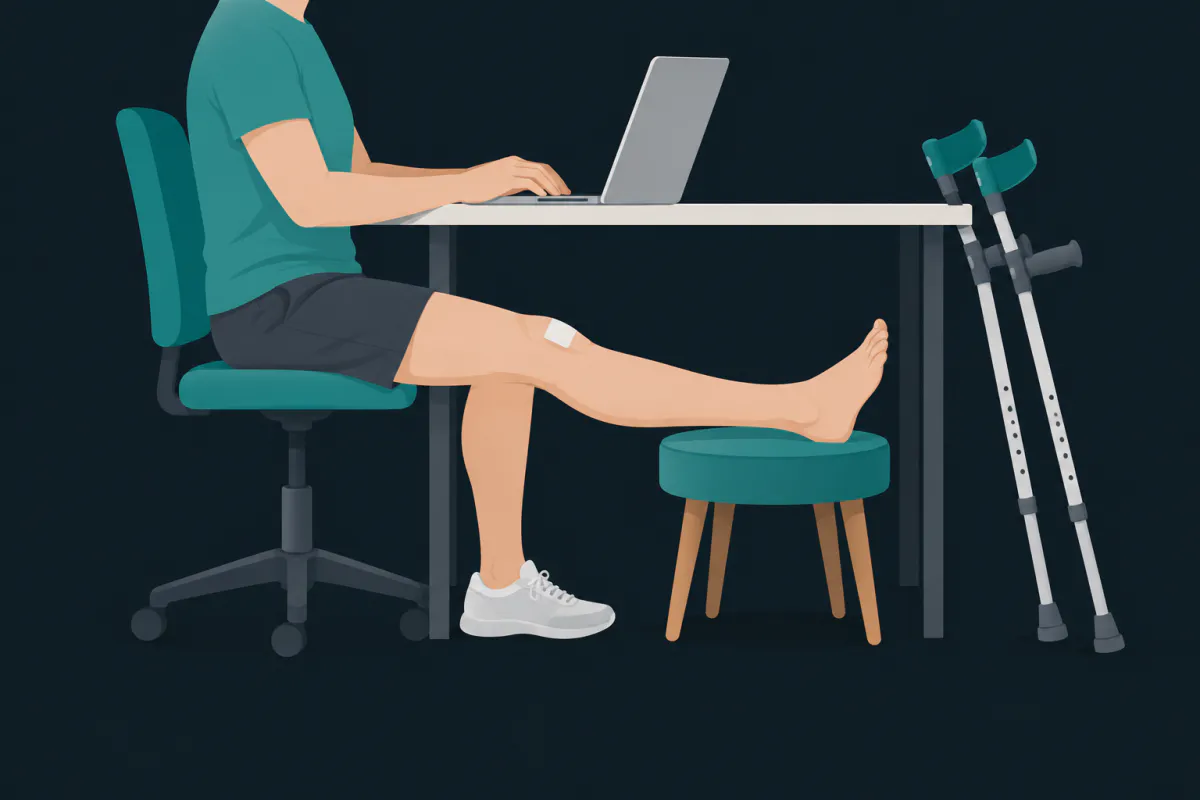
Most people ask about work before they ask about sport, often before they have left the hospital, and usually because someone else needs the answer too. The research on it is thinner than the research on running, but it points in a consistent direction: the date depends far less on the calendar than on what your working day asks the knee to do. This article covers what the studies counted, why a desk job and a knee-demanding job are different questions, and what tends to decide the timing.
Your surgeon, your physiotherapist and, if you have one, your occupational health service make this call together with you, and their instructions come first. Nothing here is clearance to go back.
What the studies counted, and what they found
Before the numbers are useful, it is worth knowing what they measure. Studies of return to work use different definitions: some count the first day back in any capacity, some count full duties without restriction, and register-based studies count the end of certified sick leave, which is partly an administrative event. Someone doing half days at a desk and someone back on a building site both appear as “returned”.
With that caveat, the headline is reassuring. Özbek and colleagues searched four databases for clinical studies reporting return to work after ACL reconstruction and found that 99.1% of the patients in them went back. Their pooled timing was a mean of 84.2 days after reconstruction with a hamstring tendon autograft and 69.5 days after an allograft, and they concluded that most patients return within about 90 days. The graft difference is worth reading carefully: these are averages pooled across separate studies rather than a randomised comparison, and allografts tend to be used in different people — often older, often less sporting — so the gap is not simply a property of the graft.
Two larger single-population studies land in a similar place by different routes.
Arimaa and colleagues followed 803 Finnish public sector employees, mean age 41, through national sick leave records after arthroscopic ACL reconstruction. The mean time back was 65 days, with a standard deviation of 41 days, and the median was 59.
Groot and colleagues took a different approach in a Dutch hospital, sending questionnaires to 185 patients who had undergone reconstruction. Of the 89 respondents who were part of the working population, 82 — 92% — had fully returned to work by follow-up, and the median time to a full return was 78 days.
Those study averages sit somewhere around two to three months. NHS guidance on recovery after knee ligament surgery gives a shorter figure — that you can return when you feel ready, usually after about four to six weeks, depending on the type of work you do — and the gap is part of the answer rather than a contradiction. General advice describes a first day back; the studies above mostly measure a full return, in populations that include people whose jobs will not accommodate one.
The spread matters more than the midpoint anyway. A standard deviation of 41 days around a mean of 65 means the typical distance from that average was more than a month in either direction. It is a description of a population, not a prediction about a knee.
Why the job matters more than the date
Groot and colleagues then asked what explained the variation, running patient, injury, surgery, sport, work and rehabilitation factors through a regression model. Two things came out as significant predictors of taking longer than the 78-day median. People doing heavy knee-demanding work had about five times the odds of a longer return than people doing light knee-demanding work (odds ratio 5.4, 90% CI 2.2 to 13.1). And each additional week spent walking with crutches raised the odds too (odds ratio 1.6, 90% CI 1.2 to 1.9).
Their final model explained 29% of the variance, and that figure is the honest shape of the whole question: the nature of the work is the strongest single factor anyone has identified, and most of what decides an individual’s timing is still not captured by any of these variables.
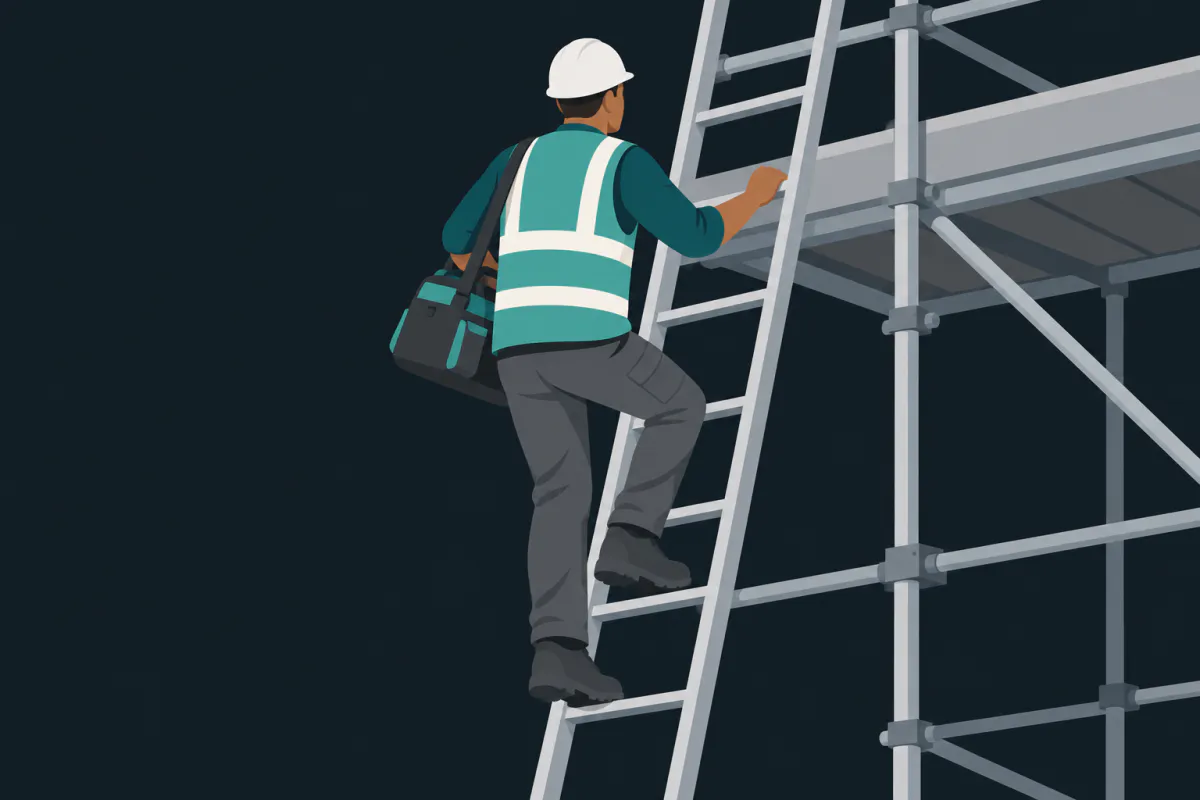
The practical reading is that “when can I go back to work” is at least two questions. Sitting at a desk asks the knee to tolerate a bent position for hours, to get to the building, and to cope with the fatigue of a normal day. Kneeling on a floor, carrying loads up stairs, climbing ladders, twisting on uneven ground or standing for a full shift asks for something the early phases of rehabilitation are not yet trying to deliver. NHS guidance makes the same distinction, noting that people whose jobs involve carrying, lifting or twisting may need to modify what they do at work at first, and suggesting the conversation about your particular occupation belongs at your hospital review.
What usually has to be working first
Rehabilitation is organised around what the knee can do rather than how many weeks have passed. The consensus guideline from van Melick and colleagues puts the first postoperative phase around reducing swelling and pain, regaining full extension, restoring quadriceps activation and normalising walking, and Noyes’ Knee Disorders sets out the same criterion-based logic that most protocols follow: each stage opens when the last one’s goals are met.
Those early goals map onto ordinary working tasks more directly than they might appear to. Walking normally without crutches is what makes a commute and a corridor manageable — and the crutches finding above suggests the two track each other. Quadriceps control is what stops the knee giving way on a step. Swelling that settles by evening rather than building through the day is what decides whether eight hours upright is realistic. Kneeling and squatting are typically late, not early.
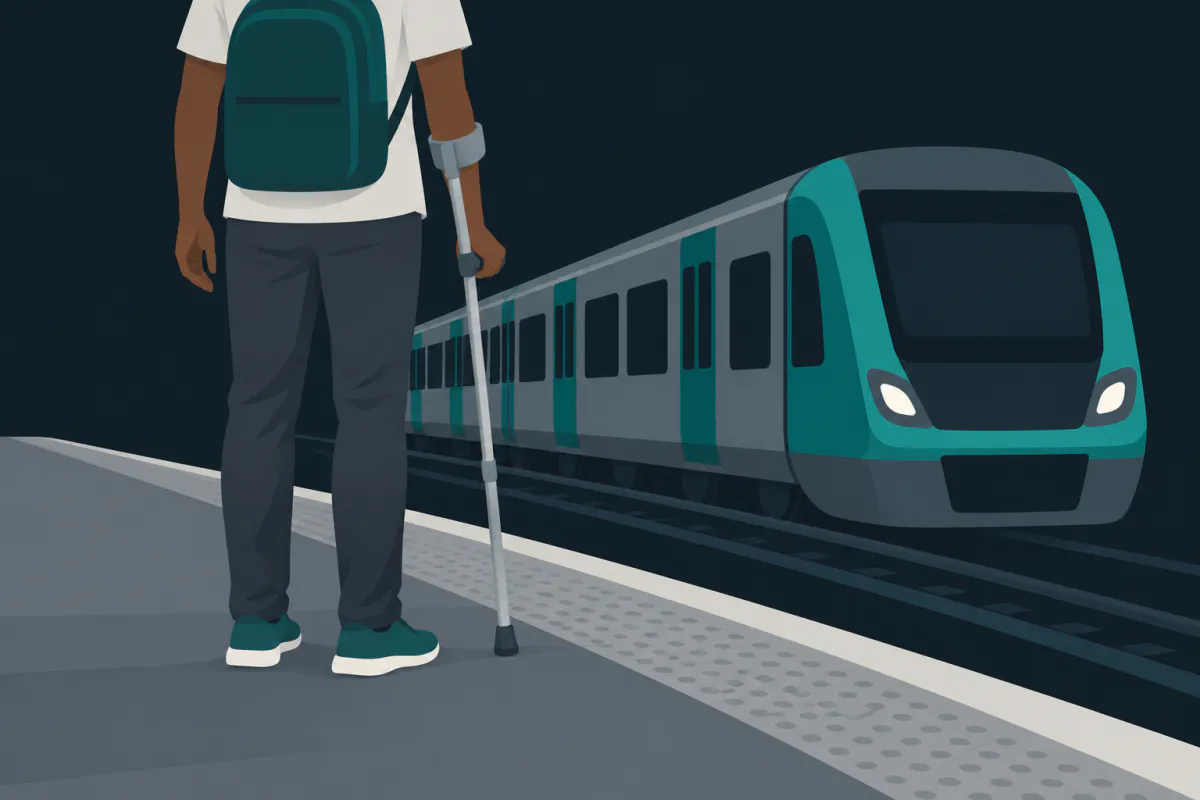
Several things can also delay a return for reasons that have nothing to do with the joint: the general anaesthetic, strong painkillers that cause drowsiness and are a problem around vehicles and machinery, and the commute itself, which for drivers is a separate question with its own research. Sitting still all day with a recently operated knee tends to swell it, which is why a way to elevate the leg often appears in early return-to-work arrangements.
Separately, some symptoms are not part of the expected picture at all. The NHS recovery guidance lists the standard warning signs after this surgery: a calf that is hot, red, swollen or painful, or new shortness of breath or chest pain, which can indicate a blood clot; spreading redness at the incision, discharge from the wound or a fever; new weakness or numbness in the foot; and a knee that locks and cannot be moved. Any of those means contacting your surgical team, your GP or an urgent care service the same day, whatever the work calendar says.
Where this sits in the programme
In practice this question comes up during the early strengthening levels, while the daily work is still extension, quadriceps control and walking properly, and it is usually settled at an appointment rather than on a fixed date. Those appointments go better with something concrete in them. If you use ACL Recovery Tracker, our free ACL rehab app for iOS and Android, the things worth bringing are already recorded: pain diary entries from 0 to 10 with the location and the moment they happened, mobility logs of extension and flexion against your healthy-leg baseline, and the sessions completed at your current level, so a week in which the knee swelled every afternoon is documented rather than remembered. You can use it on the days you are back at work too: a session is logged in about a minute.
Going back to work is the milestone most people reach first and talk about least, and it is the one where a phased or modified start is usually available and often sensible. The evidence says nearly everyone gets there, that about two months is typical, and that what you do for a living moves that figure more than anything else anyone has measured.
The illustrations in this article were generated with AI.
Sources
- Özbek EA, Dursun Savran M, Baltacı Ç, Herman ZJ, Zsidai B, Wailing J, Samuelsson K, Musahl V. Return to work after anterior cruciate ligament reconstruction: a systematic review. Orthop J Sports Med. 2024.
- Groot JAM, Jonkers FJ, Kievit AJ, Kuijer PPFM, Hoozemans MJM. Beneficial and limiting factors for return to work following anterior cruciate ligament reconstruction: a retrospective cohort study. Arch Orthop Trauma Surg. 2017;137(2):155-166.
- Arimaa A, Knifsund J, Keskinen H, Kivimäki M, Aalto V, Oksanen T, Mäkelä K, Vahtera J, Lankinen P. Return to work following anterior cruciate ligament reconstruction. Acta Orthop. 2022;93:554-559.
- van Melick N, et al. Evidence-based clinical practice update: practice guidelines for anterior cruciate ligament rehabilitation based on a systematic review and multidisciplinary consensus. Br J Sports Med. 2016;50:1506-1515.
- Noyes FR, Barber-Westin SD, eds. Noyes' Knee Disorders: Surgery, Rehabilitation, Clinical Outcomes. 2nd ed. Elsevier; 2017.
- NHS. Knee ligament surgery: recovery.
- NHS. ACL (anterior cruciate ligament) surgery: recovering.