The guide · Progression, Daily life
How much physiotherapy do you need after ACL surgery?
What the trials say about supervised appointments versus a home programme after ACL reconstruction, how many sessions people get, and what matters more.
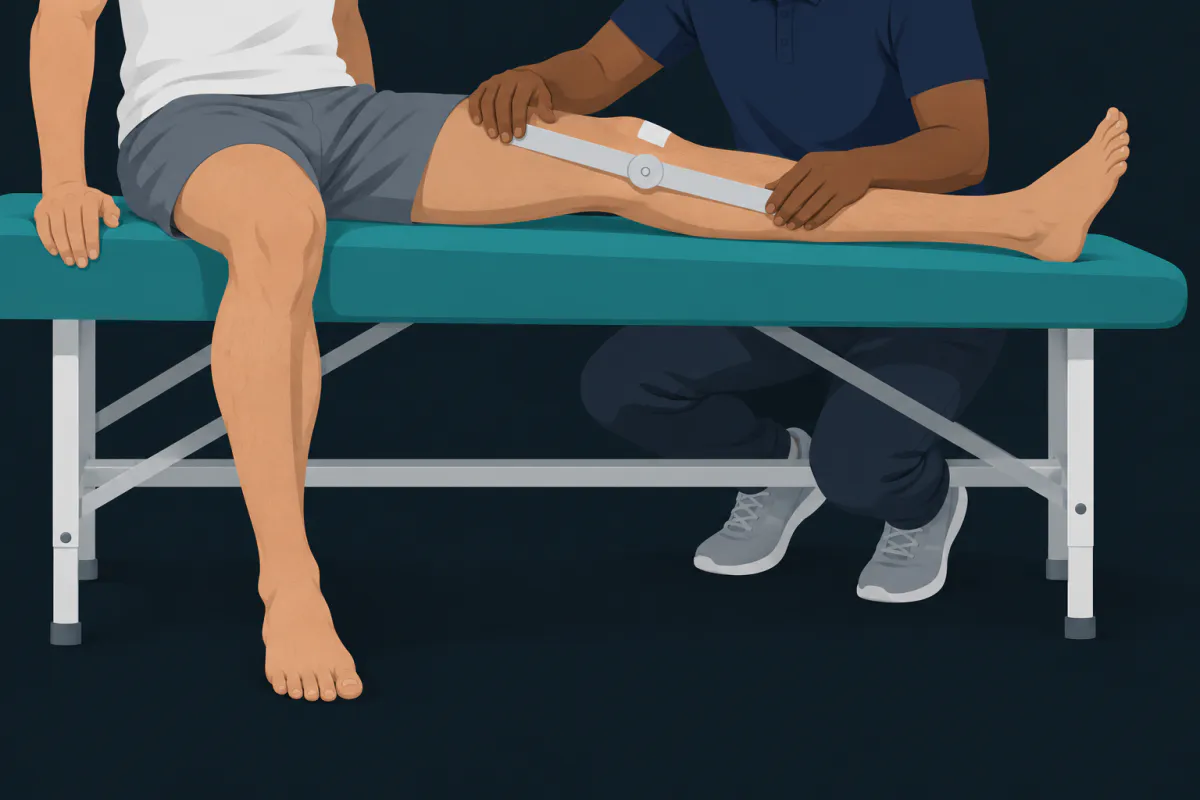
Physiotherapy after an ACL reconstruction is the part of the treatment you do yourself, and it is the part nobody puts a number on beforehand. Some people leave hospital with a weekly appointment booked for the next six months; others get four appointments and a sheet of exercises. Both are real, and the research on which of them produces a better knee is more interesting, and more reassuring, than the gap between them suggests.
How much your own knee needs is a question for your surgeon and physiotherapist. They can see the knee, they know what was done to it, and their plan comes first; everything below is what the studies found across groups of patients, not a recommendation for a particular one.
What “physiotherapy” actually means here
Two different things travel under the same word, and separating them makes the evidence much easier to read.
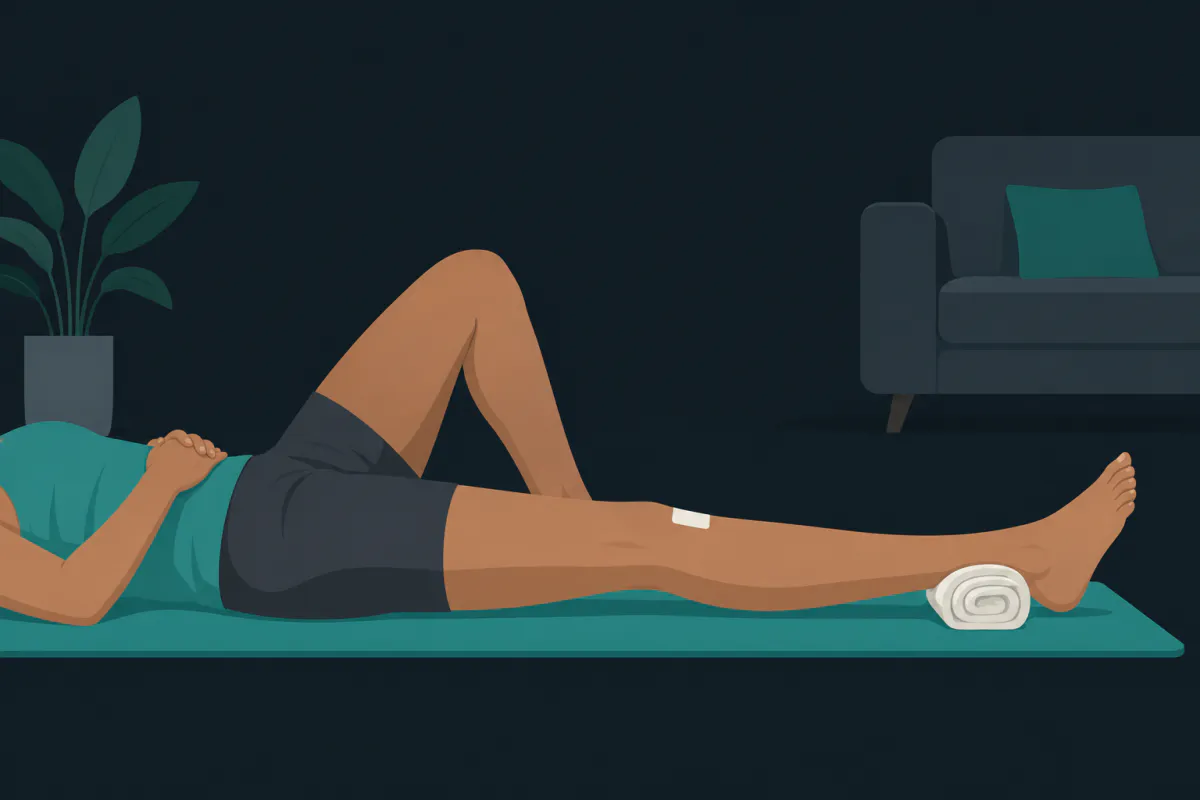
The first is supervised contact: appointments in a clinic, where someone measures the knee, watches you move, adds load and decides what changes. The second is the exercise programme you do between those appointments, at home or in a gym. Almost all of the actual work sits in the second category. Even in a well-supported programme, an hour a week in a clinic is a small fraction of the time the exercises themselves take.
The shape of the programme is not really in dispute. Rehabilitation after this operation is organised into phases with criteria for moving between them — the structure set out at length in Noyes’ Knee Disorders, and in the consensus guideline from van Melick and colleagues, which describes a prehabilitation phase before surgery and three criterion-based phases after it: an impairment-based phase, sport-specific training, and return to play. What varies between one patient and the next is not usually the content but the supervision: how often someone else looks at the knee and decides what happens next.
What happens when you compare more supervision with less
This has been tested directly. Grant and colleagues randomised 145 patients before surgery to either a physiotherapy-supervised programme of about seventeen sessions or a predominantly home-based one of about four, over the first three months after reconstruction. The home group did not come off worse; on range of motion the minimally supervised programme did at least as well. Grant and Mohtadi followed the same patients up two to four years later and again found no advantage for the more supervised group.
Gamble and colleagues pooled the trials of this question — seven articles reporting six randomised controlled trials, 353 patients in total — and concluded that, on uncertain evidence, intensive supervised rehabilitation is not superior to less supervised rehabilitation for athletes after ACL reconstruction. Their recommendation was not that supervision is pointless but that clinicians should make the decision with the patient, weighing the evidence alongside that person’s preferences and circumstances.
The 2023 Aspetar clinical practice guideline reached the same reading of the literature: across knee laxity, subjective function, functional outcomes, strength and muscle atrophy, its review found no difference between supervised and unsupervised programmes. The guideline accepts that an unsupervised programme may be what some patients need, provided the programme is personalised to them and they are monitored for problems. It also notes, importantly, how little is known about dose: there is very little evidence on the relationship between the volume or intensity of exercise and the result.
One qualification is worth keeping. Khubzan and Alhomayani reviewed twelve studies of home-based against supervised protocols and pooled seven of them. The functional and self-reported outcomes came out broadly comparable, but the supervised groups did better on hamstring strength. “As good overall” is not the same as “identical on everything”.
How much physiotherapy people actually get
The answer, at least in the United States, is less than the protocols assume. Rosenberg and colleagues looked at insurance records for patients aged 14 to 64 who had an ACL reconstruction between 2017 and 2020. Most started: 88.1 per cent had some supervised rehabilitation. But only 55 per cent were still having it beyond three months, and only 17 per cent beyond six months — well short of the later phases of a criterion-based programme, sport-specific training and return to play. Use was higher among women and younger patients, and varied by region.
Whether that matters is genuinely unsettled. A systematic review by Fausett, Reid and Larmer screened over a thousand studies, included fifteen, and concluded that it is not clear whether the quantity and duration of physiotherapy treatment meaningfully influences outcomes. Pulling the other way, a more recent review by Suits, Ahart and Humes found trends towards better strength, better performance testing and better self-reported outcomes with a longer duration of supervised rehabilitation — trends, on a small literature, not a demonstrated effect.
So the honest summary is that nobody can tell you the right number of appointments, and the studies that have tried to find one have not.
What seems to matter more than the number
If the count of appointments is not the lever, some other things plausibly are.
- Whether the programme is criterion-based. Both van Melick’s consensus and the Aspetar guideline organise progression around what the knee can do — range of motion, swelling, strength, quality of movement — rather than around the week number.
- Whether anything is measured. A plan that is not producing change is only visible if someone is recording extension, flexion, swelling and strength over time.
- Whether the work actually gets done. Brewer and colleagues followed patients’ home exercise completion daily for the first six weeks after reconstruction and found adherence shaped by pain and by psychological factors, and suggested that the sheer number of exercises prescribed may itself affect whether they are done.
- Whether someone is watching for problems. This is the part a home programme cannot replace by itself. The standard warning signs after this surgery — a calf that is hot, red, swollen or painful; a fever with redness or discharge at the incision; new weakness or numbness in the foot; a knee that locks — mean contacting your surgical team, your GP or an urgent care service the same day, as the NHS sets out.
There is also something worth saying plainly to anyone whose access to supervised sessions is limited by cost, distance or a waiting list: on the evidence above, that limit has not been shown to decide the outcome. What Gamble and colleagues recommended in place of a fixed number was a decision made together — the clinician bringing what the evidence supports, the patient bringing their circumstances.
Where the app fits
The home part is where a record earns its place, because it is the part nobody else sees. In our free ACL rehab app for iPhone and Android, levels 0 to 10 each carry their own goals, exercises and progression criteria, and the week screen shows which training days are planned and which were done; between appointments you can log pain, with its location and the moment it came on, and knee extension and flexion in degrees, so that when you do see your physiotherapist the conversation starts from what actually happened rather than from what you remember of it. Whether you are ready for the next level is still their call, and the app says as much.
The fear behind this question is usually that too few appointments will cost you the knee. On the trial evidence, that is not what the difference between four sessions and seventeen has been shown to do. What the evidence does not excuse is skipping the work itself — the timeline in how long ACL recovery takes is long whoever is watching, and it is the exercises that fill it.
The illustrations in this article were generated with AI.
Sources
- Gamble AR, Pappas E, O'Keeffe M, Ferreira G, Maher CG, Zadro JR. Intensive supervised rehabilitation versus less supervised rehabilitation following anterior cruciate ligament reconstruction? A systematic review and meta-analysis. J Sci Med Sport. 2021.
- Kotsifaki R, Korakakis V, King E, et al. Aspetar clinical practice guideline on rehabilitation after anterior cruciate ligament reconstruction. Br J Sports Med. 2023;57:500-514.
- Grant JA, Mohtadi NGH, Maitland ME, Zernicke RF. Comparison of home versus physical therapy-supervised rehabilitation programs after anterior cruciate ligament reconstruction: a randomized clinical trial. Am J Sports Med. 2005.
- Grant JA, Mohtadi NGH. Two- to 4-year follow-up to a comparison of home versus physical therapy-supervised rehabilitation programs after anterior cruciate ligament reconstruction. Am J Sports Med. 2010;38:1389-1394.
- Khubzan WD, Alhomayani KM. Comparison between home-based and supervised rehabilitation protocols after anterior cruciate ligament reconstruction: a systematic review and meta-analysis. EFORT Open Rev. 2025;10(9):695-708.
- Rosenberg et al. Limited use of supervised physical rehabilitation beyond 3 months after arthroscopic anterior cruciate ligament reconstruction with greater use in female and younger patients. Arthroscopy. 2025.
- Fausett, Reid and Larmer. The relationship between the quantity and duration of post-operative physiotherapy treatment and patient outcomes following primary anterior cruciate ligament reconstruction: a systematic review. Phys Ther Rev. 2023;28(2):111-134.
- Suits, Ahart and Humes. The effect of duration of supervised rehabilitation on outcomes following anterior cruciate ligament reconstruction: a systematic review. Int J Sports Phys Ther. 2026.
- Brewer BW, Cornelius AE, Van Raalte JL, Tennen H, Armeli S. Predictors of adherence to home rehabilitation exercises following anterior cruciate ligament reconstruction. Rehabil Psychol. 2013;58(1):64-72.
- van Melick N, et al. Evidence-based clinical practice update: practice guidelines for anterior cruciate ligament rehabilitation based on a systematic review and multidisciplinary consensus. Br J Sports Med. 2016;50:1506-1515.
- Noyes FR, Barber-Westin SD, eds. Noyes' Knee Disorders: Surgery, Rehabilitation, Clinical Outcomes. 2nd ed. Elsevier; 2017.
- NHS. ACL (anterior cruciate ligament) surgery: recovering.