The guide · Exercises, Return to sport
Plyometrics after ACL surgery: when jumping starts
Jumping usually returns in the middle months after ACL surgery, low and on two legs first, once strength, swelling and landing control meet set criteria.
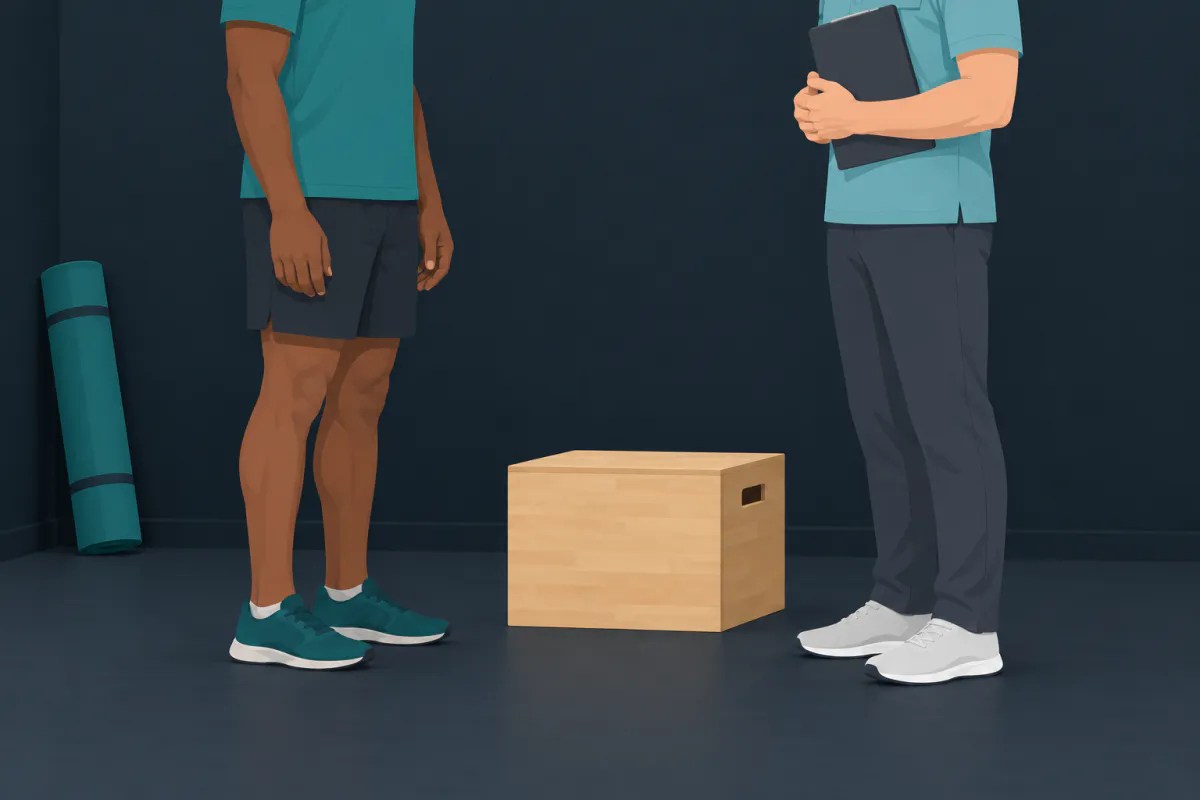
The short answer: jumping usually comes back in the middle months after an ACL reconstruction, not in a single step but in stages, from small two-footed jumps to single-leg hops and finally to jumps in every direction. When it starts depends on criteria more than on the date: a quiet knee with little or no swelling, full straightening, enough strength in the thigh, and control when landing on two legs and then on one. One published programme puts its first, low-intensity stage at around 10 to 14 weeks; other programmes start later.
Whether your knee is ready for any jumping, and which jumps, is for your surgeon and physiotherapist to decide. This article explains what plyometrics are, what the research says about adding them, and the kind of criteria clinicians look for.
What plyometrics are, and why they come back late
A plyometric exercise is one where a muscle is stretched under load and then immediately shortens: you land, the knee and hip bend to absorb it, and you push off again without a pause. Chmielewski and colleagues, in a review of plyometrics in rehabilitation, describe this stretch-shortening cycle as the identifying feature, and note that the exercises range from gentle to very demanding. Skipping, hopping, bounding and jumping onto or off a box are all plyometrics.
The demand is the reason they arrive late. Buckthorpe and Della Villa, in a clinical commentary on plyometric training after ACL reconstruction, give typical peak ground reaction forces (the force the ground pushes back with on landing) of 1.5 to 7 times body mass across plyometric tasks. A knee that is still swollen, weak or short of its full movement is not ready for the top of that range, and the authors warn that a poorly chosen task could be expected to cause adverse reactions in someone after a major leg injury.
There is also a reason to do them at all: how a person lands matters. In a group of 205 female athletes followed by Hewett and colleagues in 2005, the nine who went on to rupture an ACL had landed from a jump with the knee collapsing inwards more than the others. After reconstruction, Paterno and colleagues tested 56 athletes landing from a box before they returned to pivoting sports; inward knee movement, asymmetry between the legs and poor single-leg balance predicted who had a second ACL injury in the next year. A plyometric programme is, in large part, practice at landing well.
What the research says about adding them
The evidence on whether plyometrics improve recovery after ACL surgery is thinner than their popularity suggests.
- The Aspetar clinical practice guideline by Kotsifaki and colleagues concluded that plyometric and agility training may further improve self-reported knee function and functional activities compared with usual rehabilitation, without any increase in knee laxity or pain. It rated the certainty of that evidence as low to very low.
- In a randomised trial, Chmielewski and colleagues gave 24 people 8 weeks of low- or high-intensity plyometric exercise, which combined running, jumping and agility work, starting on average 14 weeks after surgery. The two intensities did not differ. Across both groups, self-reported knee function, jump height and quadriceps strength rose and knee pain fell.
- Much of the case for plyometrics comes from injury prevention in uninjured athletes. Hewett, Stroupe, Nance and Noyes reported in 1996 that a jump-training programme in female athletes reduced peak landing forces by 22 per cent and roughly halved the sideways bending loads on the knee.
Buckthorpe and Della Villa also observe that few patients start or complete a plyometric programme before returning to sport, so the gap is partly between what is recommended and what happens.
Criteria before the first jump
No single set of criteria is agreed. The Aspetar guideline says plainly that there is no evidence on which progression criteria should be used, and the Dutch consensus guideline by van Melick and colleagues recommends that a battery of strength, hop, movement-quality and psychological tests guides progression from one stage to the next. Building rehabilitation in phases that are entered by criteria rather than by the calendar is also the structure set out in Noyes’ Knee Disorders.
Buckthorpe and Della Villa give one detailed example. Before their first, low-intensity stage they list criteria such as:
- pain of 0 to 1 out of 10 at rest and under 2 during daily activities;
- full knee extension and more than 120 degrees of flexion;
- a well-controlled two-legged squat, with less than a 20 per cent difference in load between the legs;
- isometric quadriceps strength above 70 per cent of the other leg;
- being able to run on a treadmill for 10 minutes at 8 km/h.
They place that first stage at a typical 10 to 14 weeks after surgery, and add that the timing is only indicative and should follow the patient’s response. Their later stages add single-leg work only after more strength (for single-leg plyometrics, for instance, a single-leg leg press of 1.5 times body mass) and good single-leg landing control. What that single-leg strength work usually looks like is in ACL rehab weeks 16 to 20.
How a programme usually builds
The progressions in these papers share a logic, even where the exercises differ. Buckthorpe and Della Villa describe moving:
- from low to high effort, and from small drops to bigger ones;
- from two legs to one;
- from forward and vertical jumps to sideways and then multi-directional ones;
- from long contact with the ground, with a pause on landing, to short, quick contacts;
- from softer surfaces to firmer ones, with the number of foot contacts rising stage by stage.
Their four stages run, typically, to around 23 to 29 weeks after surgery, with on-field, sport-specific drills at the end. Chmielewski and colleagues’ 2006 review likewise describes starting at lower intensity and progressing to more difficult work.
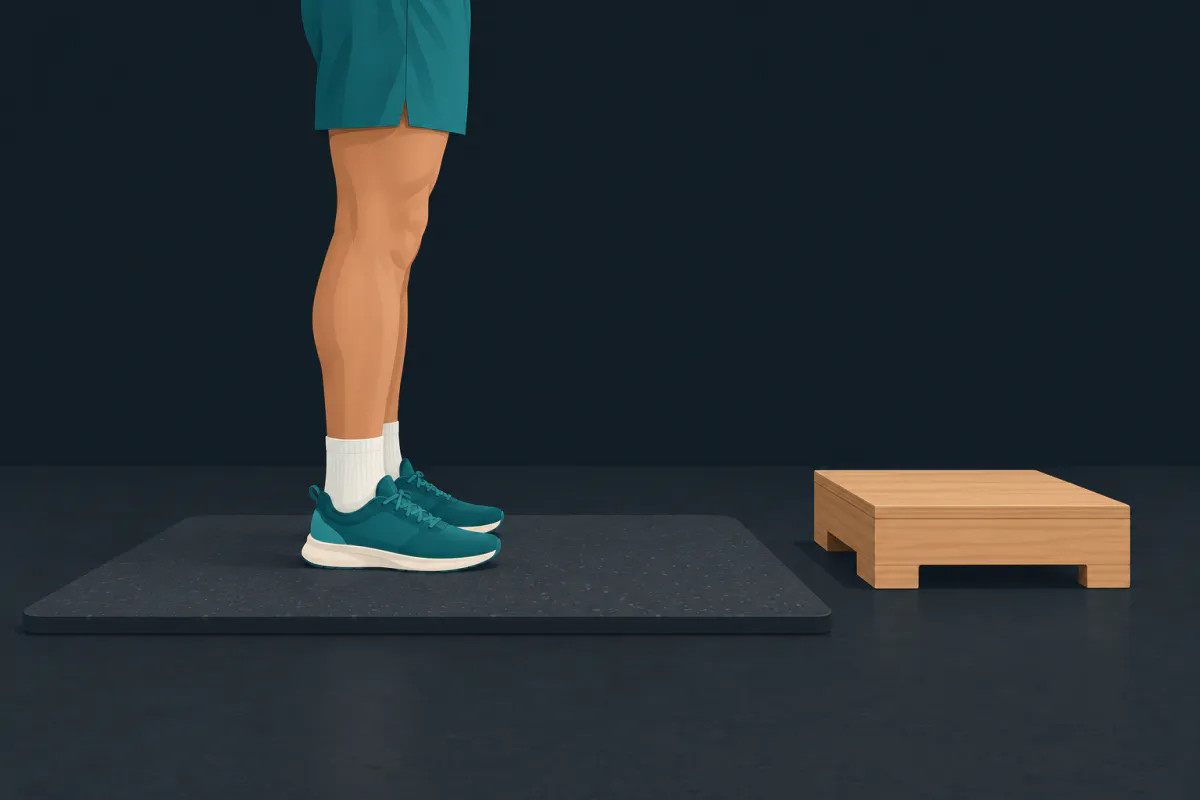
A knee that swells more or hurts more the day after a jumping session is a sign your physiotherapist uses to adjust the load; the line between expected soreness and a setback is covered in pain versus setback in ACL rehab. A knee that gives way or locks is a reason to stop and contact your care team. The formal test that often follows this phase is in hop tests after ACL surgery.
Where the app fits
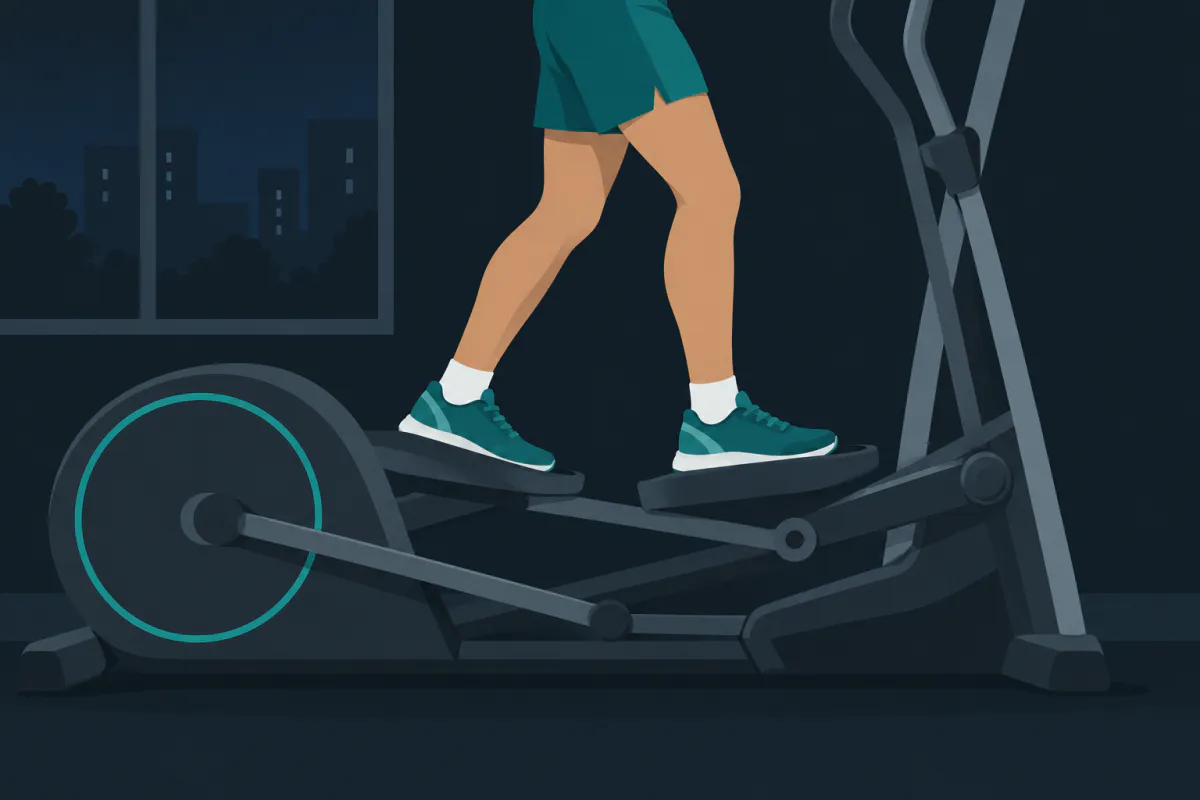
In ACL Recovery Tracker, a free ACL rehab app for iOS and Android, jumping arrives at Level 7, “Linear Running Prep”, typically weeks 20 to 24, which is later than the example above. Its sessions include double-leg pogos, a mini step drop jump, snap downs, single-leg pogos and single-leg plate jumps; Level 8 adds running, and Level 9, “Advanced Jumping”, moves on to single-leg box jumps, lateral bounds and sideways plate jumps. Each level has a progression checklist, such as 25 unbroken single-leg pogos on each side and 25 minutes on a cross trainer with no knee pain or swelling, which you tick yourself: the app does not test your knee, and the decision to move on stays with your physiotherapist. You can use it to log each jumping session and the pain afterwards, so the next conversation about moving on starts from a record.
Plyometrics are where rehabilitation starts to look like sport again, which is exactly why they are approached in small steps. The date matters less than what the knee can show, and your physiotherapist is the one watching it land.
The illustrations in this article were generated with AI.
Sources
- Buckthorpe M, Della Villa F. Recommendations for plyometric training after ACL reconstruction: a clinical commentary. Int J Sports Phys Ther. 2021;16(3):879-895.
- Chmielewski TL, Myer GD, Kauffman D, Tillman SM. Plyometric exercise in the rehabilitation of athletes: physiological responses and clinical application. J Orthop Sports Phys Ther. 2006;36(5):308-319.
- Chmielewski TL, George SZ, Tillman SM, et al. Low- versus high-intensity plyometric exercise during rehabilitation after anterior cruciate ligament reconstruction. Am J Sports Med. 2016;44(3):609-617.
- Kotsifaki R, Korakakis V, King E, et al. Aspetar clinical practice guideline on rehabilitation after anterior cruciate ligament reconstruction. Br J Sports Med. 2023;57(9):500-514.
- van Melick N, van Cingel RE, Brooijmans F, et al. Evidence-based clinical practice update: practice guidelines for anterior cruciate ligament rehabilitation based on a systematic review and multidisciplinary consensus. Br J Sports Med. 2016;50(24):1506-1515.
- Hewett TE, Stroupe AL, Nance TA, Noyes FR. Plyometric training in female athletes: decreased impact forces and increased hamstring torques. Am J Sports Med. 1996;24(6):765-773.
- Hewett TE, Myer GD, Ford KR, et al. Biomechanical measures of neuromuscular control and valgus loading of the knee predict anterior cruciate ligament injury risk in female athletes: a prospective study. Am J Sports Med. 2005;33(4):492-501.
- Paterno MV, Schmitt LC, Ford KR, et al. Biomechanical measures during landing and postural stability predict second anterior cruciate ligament injury after anterior cruciate ligament reconstruction and return to sport. Am J Sports Med. 2010;38(10):1968-1978.
- Noyes FR, Barber-Westin SD, eds. Noyes' Knee Disorders: Surgery, Rehabilitation, Clinical Outcomes. 2nd ed. Elsevier; 2017.