The guide · Mindset, Daily life
Staying motivated through nine months of ACL rehab
Motivation in ACL rehab tends to sag in the long middle months. What the studies found gets in the way, and what helps: support, small goals, a record.
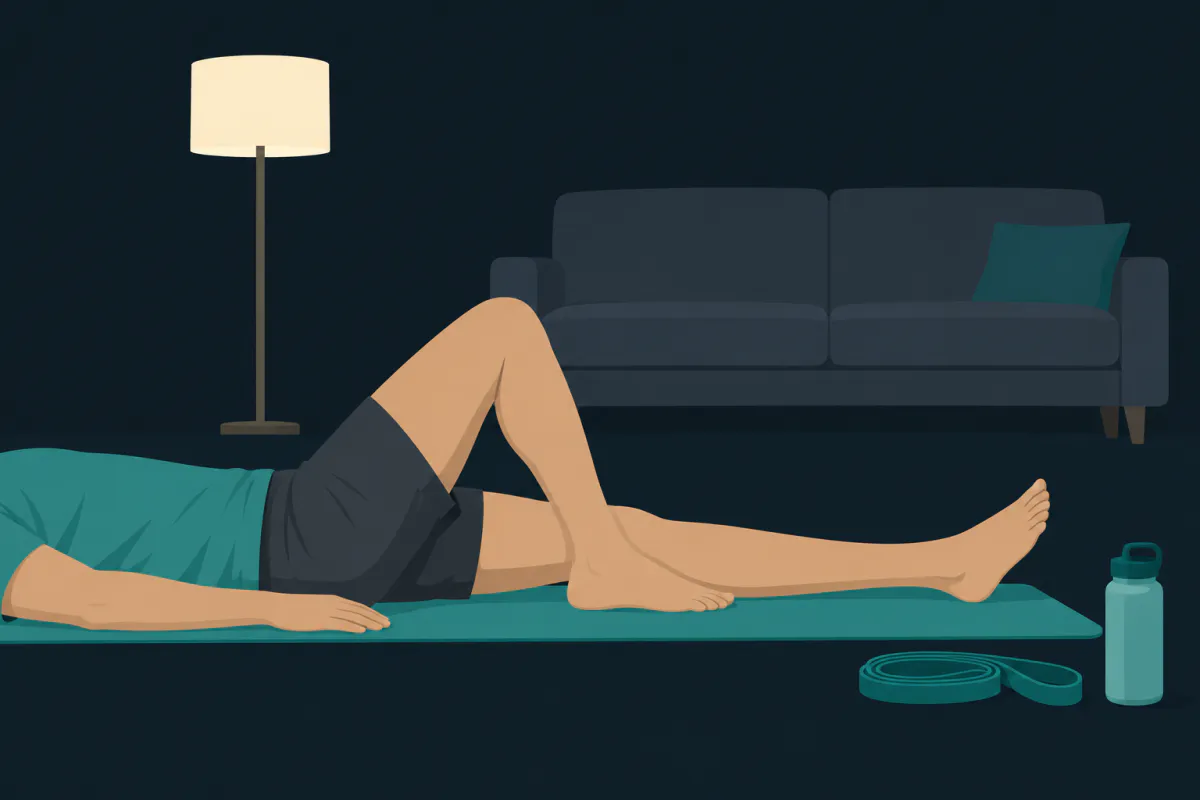
The short answer: motivation in ACL rehab rarely fails all at once. It tends to wear thin in the long middle months, when the early gains slow down, appointments become less frequent and return to sport is still far away. In the studies of people going through it, a good relationship with the physiotherapist and support from family and friends were among the things people named most often as helping, fear of reinjury was the most common barrier, and setting short goals has some, thin, evidence behind it. Your surgeon and physiotherapist set your programme and its pace; this article is about what the research found on keeping it going, not about what your knee should be doing.
Why the middle months are the hard part
The Dutch clinical practice guideline by van Melick and colleagues recommends that rehabilitation after ACL reconstruction continues for 9 to 12 months, passed in phases on criteria rather than dates. That is a long time to keep at exercises whose results show slowly. The longer account of how those months divide up is in how long ACL recovery takes.
Heijne and colleagues interviewed ten patients about their first year after surgery. The frustration they described most was that the pace of rehabilitation and what it meant did not match what they had expected. The patients settled into one of three ways of handling it, which the authors called going for it, being ambivalent and giving in. The authors asked for more help with realistic goal setting and for coaching that lasts the whole of rehabilitation, not only its start.
Support also thins out as the months pass. Walker and colleagues surveyed 304 adults one to twenty years after their reconstruction. In the first three months the most common pattern was a weekly visit to a physiotherapist or other provider, reported by 38 per cent; by months six to nine it was a monthly one, reported by 26 per cent. A good relationship with the provider was the facilitator named most often, by 84 per cent, and fear of reinjury the most common barrier, by 44 per cent. Only 43 per cent were back at their previous level of sport. No study we found has measured motivation month by month across an ACL rehab, so the dip is what patients describe rather than a measured curve.
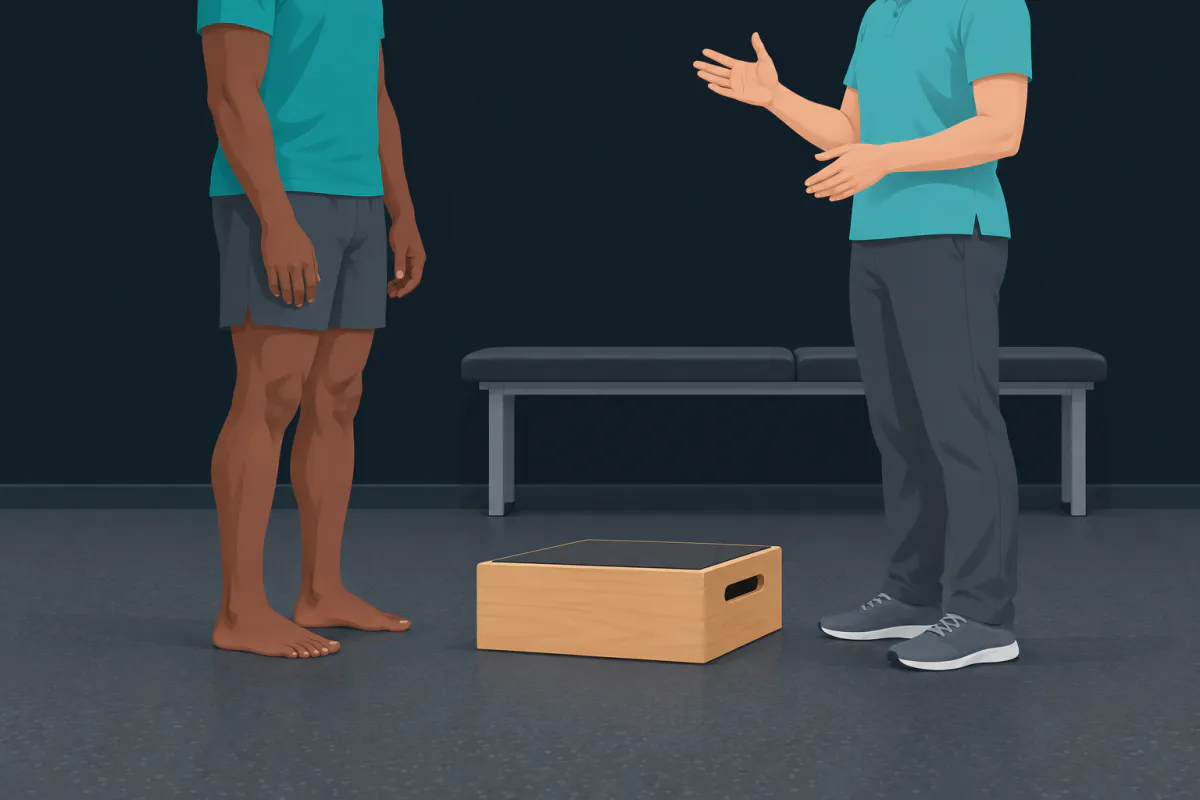
What gets in the way
A scoping review by the same group gathered 71 studies on taking part in ACL rehabilitation and sticking to it. The barriers and facilitators patients mentioned most were:
- the relationship with the physiotherapist;
- family and friends;
- their own self-motivation;
- fear of reinjury;
- organisation and lack of time;
- comparing themselves with other patients.
Fear of reinjury has its own article: fear of reinjury after ACL surgery.
The day itself matters too. Brewer and colleagues asked 91 people to keep a daily diary for the first six weeks after reconstruction, recording pain, mood, stress and the home exercises they did. Adherence was high overall, and it rose over those weeks, during which the number of prescribed sets came down. On days with more stress or a worse mood, fewer exercises got done. Traits such as optimism, or how strongly someone saw themselves as an athlete, did not predict who did them.
Outside ACL surgery the pattern is similar. Jack and colleagues reviewed 20 high-quality studies of physiotherapy patients and found strong evidence that low self-efficacy (confidence that you can do what is asked), depression, anxiety, little social support, more pain during exercise and more perceived barriers to exercise all went with poorer adherence. If low mood lasts, or spreads beyond the rehab, that is worth raising with your GP or your care team; it is a common part of a long recovery, not a failing.
Small goals, and what the evidence says
A nine-month target is too far away to steer by on a Tuesday evening. Breaking it into shorter goals has at least been tested in a trial of injured athletes. Evans and Hardy randomised injured athletes, with injuries of all kinds and not only ACL tears, to a five-week goal-setting programme, a social-support programme or no programme. The goal-setting group reported significantly better adherence than the other two and had the highest self-efficacy.
The evidence is thin, and it should be said plainly. Peek and colleagues reviewed 12 randomised trials of ways to help physiotherapy patients carry out their home programmes. Goal setting, written exercise instructions, an activity monitor with feedback and a behavioural programme with booster sessions all showed potential, but the authors concluded there was not yet enough data to recommend any of them.
Rehabilitation already comes with a structure of short goals, because the phases are passed on criteria: a knee that straightens fully, a normal walk, a strength target, a hop test. Each criterion met is a real step, not a consolation prize, and it is your physiotherapist who confirms when it has been met.
Keeping a record
Writing down what you did is a simple form of self-monitoring, and the trials of it are small. Lambert and colleagues randomised 80 people with musculoskeletal conditions on a four-week home programme to either a paper handout or an app with the same exercises, phone calls and motivational text messages. The app group reported slightly better adherence, 1.3 points on an 11-point scale, and slightly better function; the authors said the clinical importance of the difference was unclear.
More is not automatically better, either. Pizzari and colleagues followed 68 people for the first eight weeks after ACL reconstruction and checked their knees at 9 and 12 months. In patients under 30, doing more of the home exercises went with better outcomes on several measures. In those aged 30 and over, the relationship went the other way. The programme your physiotherapist prescribes, at its dose, is the target, and a record is most useful as something you bring to them. Why the days off belong to that dose is in rest days in ACL rehab. What the studies say about how much supervised physiotherapy helps is in how much physiotherapy you need after ACL surgery.
Where the app fits
ACL Recovery Tracker, a free ACL rehab app for iOS and Android, splits the year into ten levels, each with its own exercises and a progression checklist, so the next goal is always the end of the current level rather than month nine. You can use it to see the long middle as a series of finished weeks: the week screen shows which training days were planned and which were done, reminders arrive on the days you chose to train, and the mobility log keeps your extension and flexion in degrees beside the healthy-leg baseline, so a change too slow to feel still shows up. You tick the checklist yourself; whether a level is done is still your physiotherapist’s call.
Nine months is long, and in the interviews and surveys above, frustration with its pace was common. The research suggests that people get through those weeks less by willpower than by support, by goals near enough to reach, and by being able to see that the knee is in fact changing.
The illustrations in this article were generated with AI.
Sources
- Heijne A, Axelsson K, Werner S, Biguet G. Rehabilitation and recovery after anterior cruciate ligament reconstruction: patients' experiences. Scand J Med Sci Sports. 2008;18(3):325-335.
- Walker A, Hing W, Lorimer A. The influence, barriers to and facilitators of anterior cruciate ligament rehabilitation adherence and participation: a scoping review. Sports Med Open. 2020;6(1):32.
- Walker A, Hing W, Lorimer A, Rathbone E. Rehabilitation characteristics and patient barriers to and facilitators of ACL reconstruction rehabilitation: a cross-sectional survey. Phys Ther Sport. 2021;48:169-176.
- Brewer BW, Cornelius AE, Van Raalte JL, Tennen H, Armeli S. Predictors of adherence to home rehabilitation exercises following anterior cruciate ligament reconstruction. Rehabil Psychol. 2013;58(1):64-72.
- Jack K, McLean SM, Moffett JK, Gardiner E. Barriers to treatment adherence in physiotherapy outpatient clinics: a systematic review. Man Ther. 2010;15(3):220-228.
- Evans L, Hardy L. Injury rehabilitation: a goal-setting intervention study. Res Q Exerc Sport. 2002;73(3):310-319.
- Peek K, Sanson-Fisher R, Mackenzie L, Carey M. Interventions to aid patient adherence to physiotherapist prescribed self-management strategies: a systematic review. Physiotherapy. 2016;102(2):127-135.
- Lambert TE, Harvey LA, Avdalis C, et al. An app with remote support achieves better adherence to home exercise programs than paper handouts in people with musculoskeletal conditions: a randomised trial. J Physiother. 2017;63(3):161-167.
- Pizzari T, Taylor NF, McBurney H, Feller JA. Adherence to rehabilitation after anterior cruciate ligament reconstructive surgery: implications for outcome. J Sport Rehabil. 2005;14(3):202-214.
- van Melick N, van Cingel RE, Brooijmans F, et al. Evidence-based clinical practice update: practice guidelines for anterior cruciate ligament rehabilitation based on a systematic review and multidisciplinary consensus. Br J Sports Med. 2016;50(24):1506-1515.