The guide · Progression, Timeline, Return to running
ACL rehab weeks 20 to 24: getting ready to run
Around weeks 20 to 24 after ACL surgery, many programmes add small jumps, landing practice and stamina work. Why, and what usually decides the first run.
The short answer: around weeks 20 to 24 after an ACL reconstruction, many programmes add small jumps and hops and practise landing. Stamina work, for example on a cross trainer, often comes too. The aim is a knee that copes with landing and pushing off again and again, because that is what running asks of it. Your strength, your control and how the knee reacts decide when you run, not the date.
Your surgeon’s and physiotherapist’s instructions come first, and their timing can differ from this with your graft, any other repair or your sport.
What changes around week 20
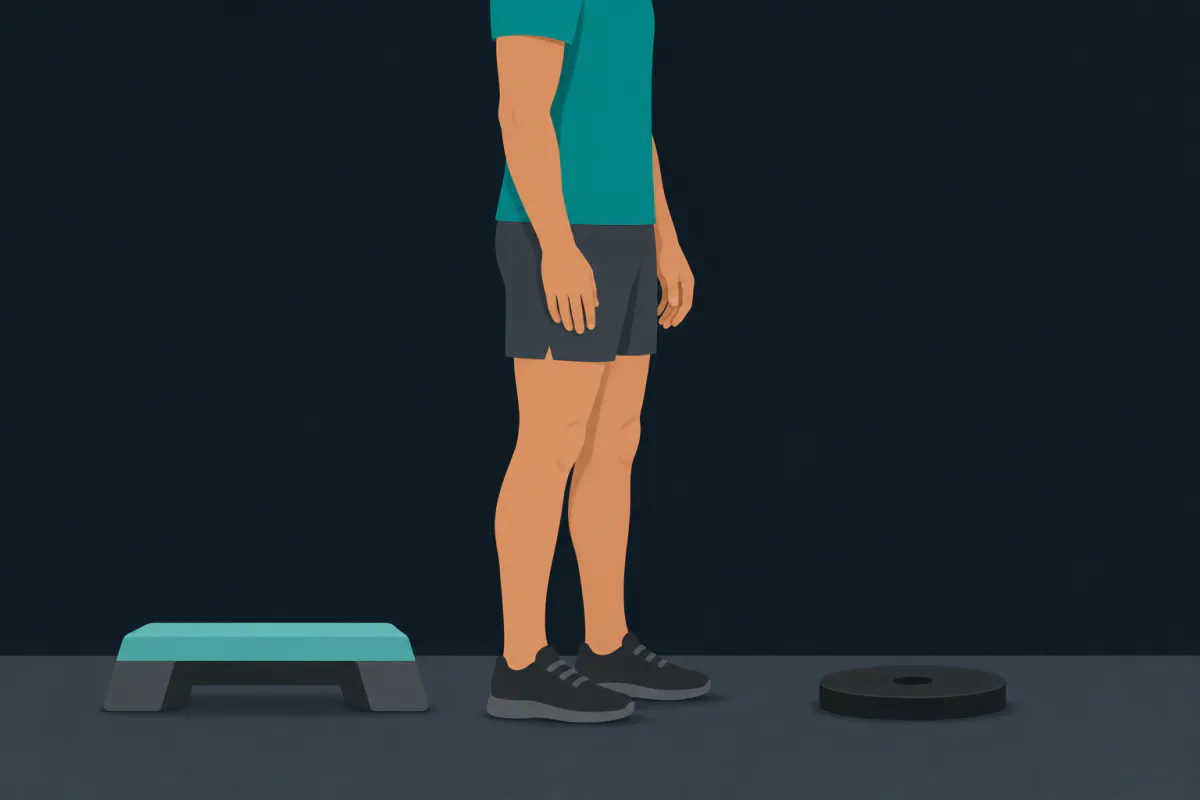
Until now, most of your work has been strength training, with your foot on the floor or on a machine. Now your foot leaves the ground. You might bounce on the balls of your feet or step off a low step and land. Later you might hop on one leg onto a flat plate and off again. This is jump training (plyometrics).
Progressing through phases by meeting criteria, rather than by counting weeks, is the structure set out in Noyes’ Knee Disorders. Programmes differ a lot in when jumping starts, so the weeks here are a typical range.
One group of experts describes how jump training usually grows (Buckthorpe and Della Villa). It starts with both feet, small jumps and slow landings, around weeks 10 to 14 in their plan, and moves on to one leg. The number of landings per session rises step by step, and the time your foot spends on the floor gets shorter.
Their plan also aims to bring back your fitness along the way. It is expert opinion, not the result of a trial, and they say its weeks are only a guide.
Why landing gets so much attention
After an ACL reconstruction, the operated knee often takes less of the work when you land. A study tested 103 young athletes when they went back to sport (Ithurburn and colleagues). When they dropped from a box onto one leg, the operated knee bent less and took less of the load than the other knee. They leaned their trunk forward more to make up for it.
Even those whose thigh muscles (quadriceps) were nearly as strong as on the other side landed unevenly. The gap was larger in those whose quadriceps were weaker. So strength helps, but landing is a skill that also needs practice.
Running shows a similar pattern. A review of 25 studies found that the operated knee bends less while the foot is on the ground during running (Pairot-de-Fontenay and colleagues). This was seen from 3 months to 5 years after surgery, and it did not simply go away with time.
That is one reason programmes practise how you land before you run, and keep working on it once you do.
What usually decides your first run
There is no agreed rule for when running starts. A review of 201 studies found that nearly all of them allowed running after a set time (Rambaud and colleagues). The median was 12 weeks after surgery, with a range from 5 to 39 weeks. Fewer than 1 in 5 studies used any other test.
When studies did use other tests, the most common were:
- Movement: a full range of knee movement, or close to the other knee;
- Pain: none, or very little;
- Strength: the thigh muscles at more than 70 per cent of the other leg;
- Hops: hop tests at more than 70 per cent of the other leg.
The review concludes that the best evidence supports combining tests like these with time. Hop tests after ACL surgery explains how those percentages are measured.
How to build up running is even less clear. A review of 64 studies found that few described their running programme in any detail (Van Cant and colleagues). So your physiotherapist’s plan is the one that counts.
How your knee reacts also counts. The expert plan above moves you on to harder jumps only when the last ones caused no more than a little pain and no rise in swelling. More pain or swelling means the load was too much.
Pain versus a setback explains how ordinary soreness usually differs from a sign worth reporting. Some signs need prompt contact with your care team, whatever the week:
- a calf that is hot, red, swollen or painful;
- a fever, or spreading redness or discharge at the incision;
- new weakness or numbness in your foot;
- a locked knee.
Where the app fits
In ACL Recovery Tracker, a free ACL recovery app for iOS and Android, this stage is Level 7, “Linear Running Prep”. It typically covers weeks 20 to 24. This is later than the 12-week median above, because the app puts running after the gym levels and this one. Level 7 has one session, “Plyometric Prep”, planned two or three times a week:
- deceleration lunge, 3 sets of 5 on each leg;
- snap downs, 3 sets of 5;
- mini step drop jump, 3 sets of 10;
- double leg pogos, 3 sets of 10;
- single leg pogos, 3 sets of 10 on each leg;
- single leg plate jumps, 3 sets of 10 on each leg;
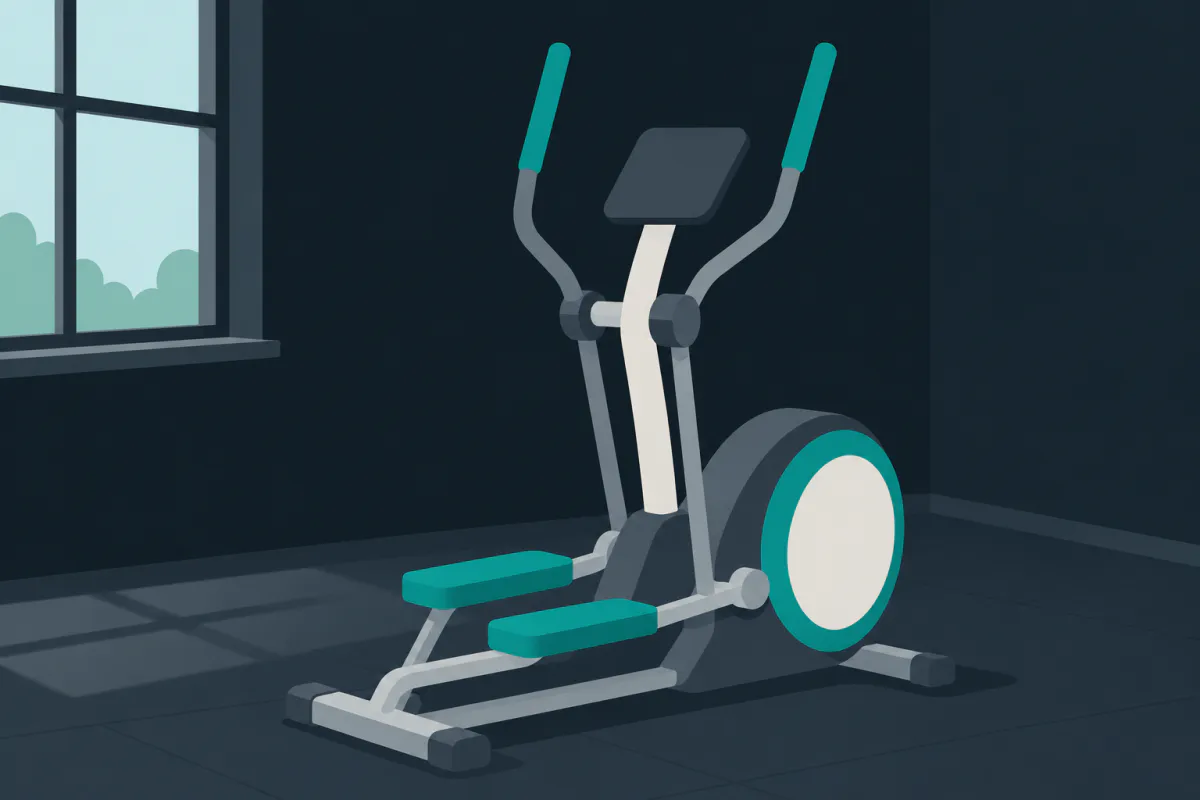
- cross trainer, starting at 5 minutes and building up.
Every jump in the session ends with the same step: if your knee is more swollen or sore the next morning, skip jumping for a day and do fewer next time. The level also asks you to keep up your gym strength work alongside these sessions.
The checklist for moving on asks for:
- single leg plate jumps: 25 in a row;
- single leg pogos: 25 in a row on each side;
- single leg snap downs: 5 on each side with good form;
- cross trainer: 25 minutes without stopping, with no knee pain or swelling.
Those figures are the programme’s own, not numbers from the studies above. You tick them yourself: the app does not test your leg. You can use the app to log each jumping session and any pain the next day. Then you and your physiotherapist can see how the knee reacts as the jumps grow.
After revision surgery, Level 7 starts no earlier than week 27. Running itself comes at Level 8. Before your first run, the app asks you to get the go-ahead from your surgeon or an ACL physiotherapist. These weeks build the landings that running repeats with every step.
The illustrations in this article were generated with AI.
Sources
- Buckthorpe M, Della Villa F. Recommendations for plyometric training after ACL reconstruction - a clinical commentary. Int J Sports Phys Ther. 2021;16(3):879-895.
- Ithurburn MP, Paterno MV, Ford KR, Hewett TE, Schmitt LC. Young athletes with quadriceps femoris strength asymmetry at return to sport after anterior cruciate ligament reconstruction demonstrate asymmetric single-leg drop-landing mechanics. Am J Sports Med. 2015;43(11):2727-2737.
- Pairot-de-Fontenay B, Willy RW, Elias ARC, Mizner RL, Dubé MO, Roy JS. Running biomechanics in individuals with anterior cruciate ligament reconstruction: a systematic review. Sports Med. 2019;49(9):1411-1424.
- Rambaud AJM, Ardern CL, Thoreux P, Regnaux JP, Edouard P. Criteria for return to running after anterior cruciate ligament reconstruction: a scoping review. Br J Sports Med. 2018;52(22):1437-1444.
- Van Cant J, Pairot de Fontenay B, Douaihy C, Rambaud A. Characteristics of return to running programs following an anterior cruciate ligament reconstruction: a scoping review of 64 studies with clinical perspectives. Phys Ther Sport. 2022;57:61-70.
- Noyes FR, Barber-Westin SD, eds. Noyes' Knee Disorders: Surgery, Rehabilitation, Clinical Outcomes. 2nd ed. Elsevier; 2017.