The guide · Using the app, Measuring progress
Setting up ACL rehab tracking: what to record first
When you start logging ACL rehab: your surgery date and what was done, a checked starting point, the other knee's range of motion, and how the knee answers.
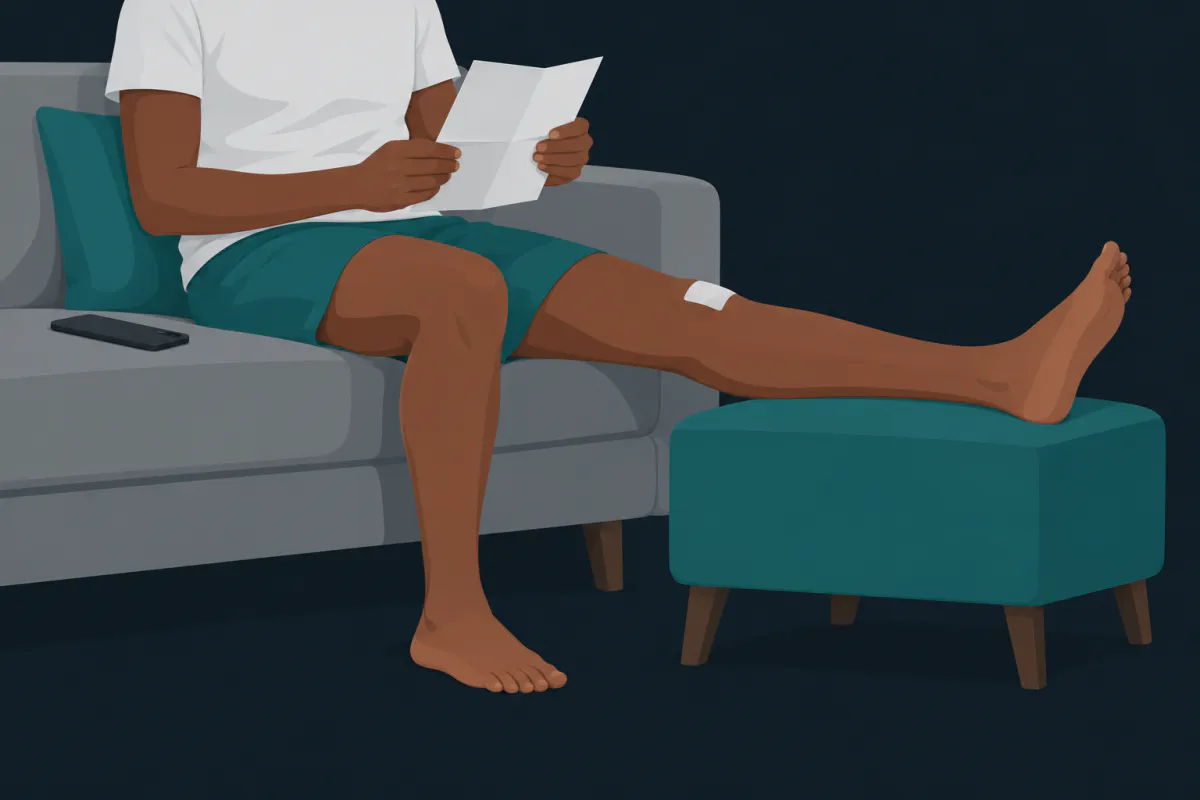
The short answer: four things are worth recording when you start logging your rehabilitation. The date of the operation and what was done in it, because a repaired meniscus or another procedure can change the early weeks. A starting point you have checked against what your knee can actually do today, rather than one picked from the calendar. The range of motion of your other knee, because that is the target your operated knee is measured against. And how the knee answers the first session, that evening and the next morning. Your surgeon and physiotherapist set the programme, and anything you record is there to support their plan, not to replace it.
The date, and what the surgeon did
The surgery date is the anchor for everything that follows. Protocols are written in weeks after the operation, and some limits are set by healing time rather than by how the knee feels. The consensus guideline from van Melick and colleagues expects rehabilitation after ACL reconstruction to continue for nine to twelve months, so the date is also what lets you see where you are in that span.
What was done in the operation matters as much as when. An ACL reconstruction is often not only an ACL reconstruction: a torn meniscus may be stitched or trimmed, and the graft may come from different places. A stitched meniscus is one detail that often changes the early weeks. O’Donnell and colleagues reviewed rehabilitation after meniscal repair on its own, without an ACL reconstruction, and found that protocols varied widely in how much weight they allowed on the leg and how far they let the knee bend, with no agreement on the best limits. What that means for a knee with both repairs is covered in meniscus repair with ACL reconstruction.
The operation note or the discharge letter usually says what was done. If it does not, the surgeon’s team can tell you, and it is worth asking before you set anything up, because the answer decides which limits apply to you.
A starting point you have actually checked
Rehabilitation after this operation moves on by criteria, not by date alone. The van Melick guideline describes criterion-based phases, with strength, hop, movement-quality and psychological tests used to decide when to move from one to the next. Each phase ends when its goals are met, not when a set number of weeks has passed.
That has a practical consequence for anyone starting to track partway through. Weeks since surgery tell you where most people usually are, not where you are. If you begin logging at week ten, the honest starting point is the stage whose entry criteria your knee already meets, and that may be earlier than the calendar suggests. Starting at a stage you have not reached means doing exercises written for a knee that has more strength and control than yours.
So the useful question at the start is not “which week am I in” but “which of these criteria can I meet today, without pain or swelling afterwards”. If you are unsure about any of them, your physiotherapist can check them at your next appointment. The difference between strong evidence and expert agreement in all this is the subject of what evidence-based ACL rehab actually means.
Measure the other knee before it changes
The target for range of motion is not a number from a textbook. It is your other knee. Shelbourne and Gray, following patients for at least ten years after reconstruction, defined normal knee motion as extension within two degrees of the other knee, hyperextension included, and flexion within five degrees. Many knees straighten a few degrees past flat, and if yours do, flat is not the finish line for the operated one.
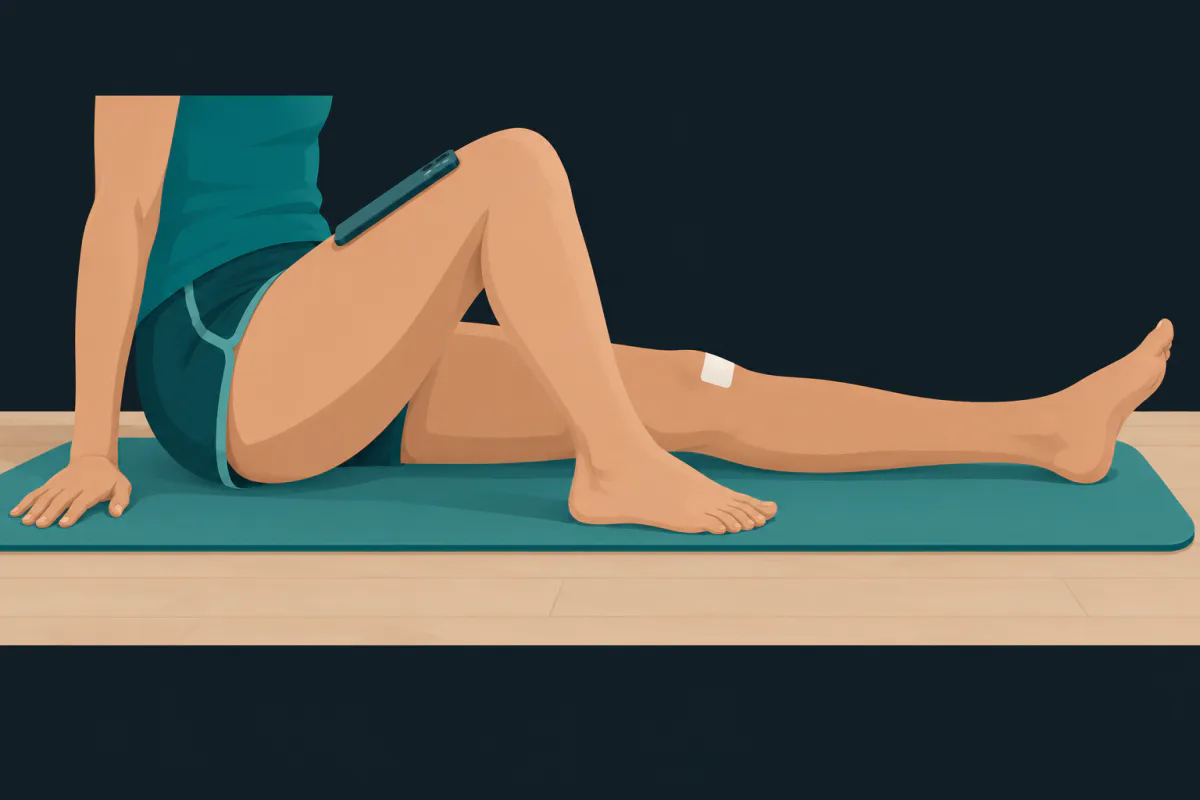
There is also a reason to measure early. The other leg does not stand still during a rehabilitation. Wellsandt and colleagues tested 70 athletes before reconstruction and six months after it, comparing the operated leg with the other leg as it was at six months, and with the other leg as it had been before surgery. Measured against the earlier values, far fewer reached 90 per cent on quadriceps strength and all four hop tests: 28.6 per cent rather than 57.1 per cent. That study was about strength and hopping rather than range of motion, but it shows the general point. A reference taken from the other leg changes as the months pass, so a measurement taken early is worth keeping.
For range of motion at home, consistency matters more than precision. Milanese and colleagues found a smartphone goniometer app as reliable as a standard goniometer for repeated knee flexion measurements, but in the hands of clinicians and physiotherapy students, not patients measuring themselves. Your own readings will be noisier, which is why the same position, the same time of day and the same method each time count for more than any single number. The method is written up in measuring knee flexion with your phone and in measuring knee extension at home.
A first session you can finish
The first session you log is also the first reading of how your knee responds. The van Melick guideline states the rule most protocols follow for moving on: loading is increased when the movement is performed correctly and there is no pain, no effusion (fluid inside the joint) and no increase in symptoms afterwards.
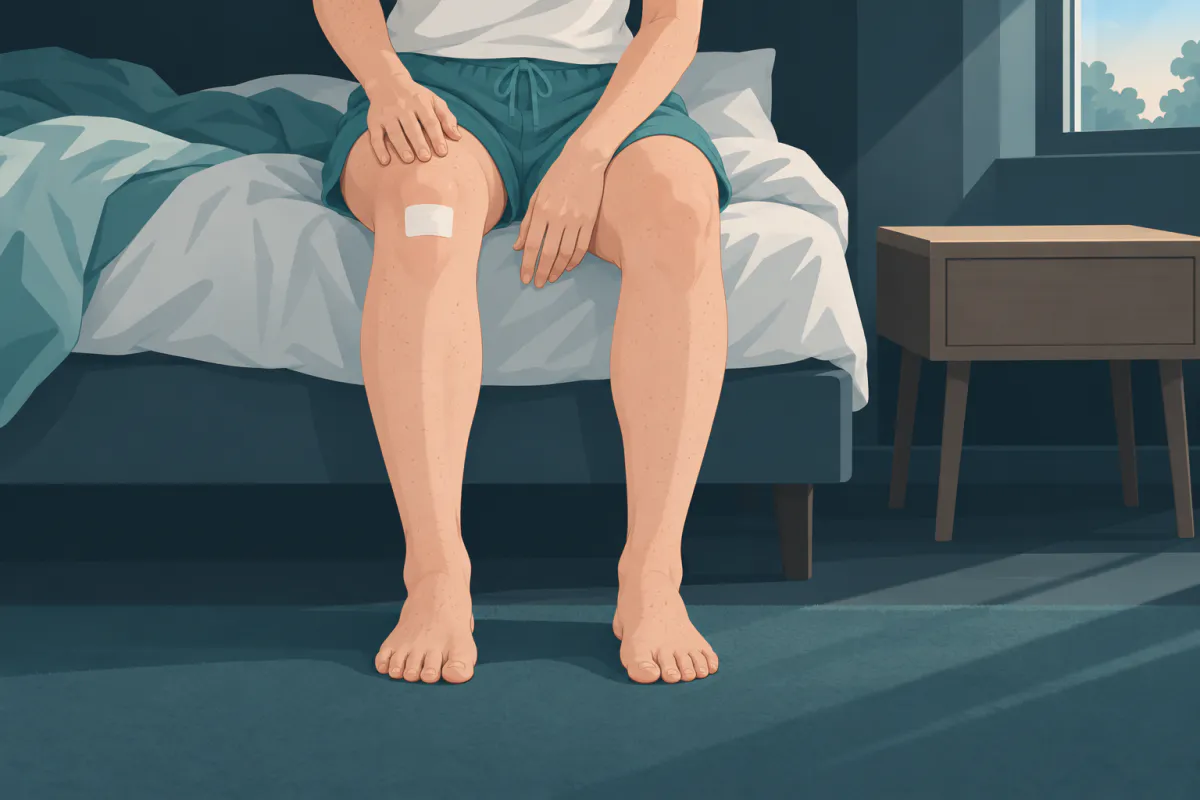
That gives the first entries their purpose. A session done exactly as prescribed, followed by a note of pain that evening and of the swelling the next morning, is a reference point. Every later session can be compared with it, and a jump in pain or swelling after a change is the kind of thing your physiotherapist wants to hear about. A first session done harder than prescribed, to make up for days missed, tells you less and risks the reaction you are trying to watch for.
Where the app fits
ACL Recovery Tracker is a free ACL rehab app for iOS and Android, and its setup asks for these things in this order. Onboarding takes your surgery date, then your surgery details: the graft and anything else the surgeon did, with “Not sure / just the ACL” as one of the answers. It adds notes from published protocols for those answers and hides nothing. In the first four weeks after surgery everyone starts at Level 1; later, it suggests the level people usually reach by your date and shows the progression checklist of the level below for you to tick, and you can skip that and choose the level yourself. Once you are in, the healthy-leg baseline is set in Mobility History, with the other knee’s flexion and extension typed in degrees; you can measure them with the phone’s gyroscope or a goniometer. After the first workout, the post-workout log records pain and mobility, and every section of it is optional. You can use it as the record of that first reference point, kept on your phone with no account.
Most of what a tracker is good for depends on the first week of entries. An honest start, a reading of the other knee and a session done as written are dull to record, and they are what make every later number mean something.
The illustrations in this article were generated with AI.
Sources
- van Melick N, et al. Evidence-based clinical practice update: practice guidelines for anterior cruciate ligament rehabilitation based on a systematic review and multidisciplinary consensus. Br J Sports Med. 2016;50:1506-1515.
- Shelbourne KD, Gray T. Minimum 10-year results after anterior cruciate ligament reconstruction: how the loss of normal knee motion compounds other factors related to the development of osteoarthritis after surgery. Am J Sports Med. 2009;37(3):471-480.
- Wellsandt E, Failla MJ, Snyder-Mackler L. Limb symmetry indexes can overestimate knee function after anterior cruciate ligament injury. J Orthop Sports Phys Ther. 2017;47(5):334-338.
- Milanese S, et al. Reliability and concurrent validity of knee angle measurement: smart phone app versus universal goniometer used by experienced and novice clinicians. Man Ther. 2014;19(6):569-574.
- O'Donnell K, Freedman KB, Tjoumakaris FP. Rehabilitation protocols after isolated meniscal repair: a systematic review. Am J Sports Med. 2017;45(7):1687-1697.