The guide · Progression, Exercises
Should you do ACL rehab exercises every day?
Early range-of-motion and quad exercises are usually daily, often several times a day; strength work moves to a few days a week. Your programme sets the days.
The short answer: it depends on the kind of exercise and on how far you are from surgery. In the first weeks, the gentle exercises for movement and for switching the thigh muscle back on are usually done every day, and often several times a day: NHS hospital leaflets range from at least three to five times a day to every hour. Strength training is different, and is usually spread over a few days a week with recovery in between; for healthy adults new to it, the American College of Sports Medicine recommends two to three days a week. Your surgeon and physiotherapist decide what you do and how often, and their programme comes first; this article explains why the answer changes over the months.
Not all rehab exercises are the same kind of work
An ACL rehabilitation programme mixes several kinds of exercise, and they are dosed differently because they do different jobs.
- Movement exercises keep the knee bending and straightening while it heals. They are light and are about how often the knee moves, not how hard.
- Muscle activation exercises, such as tightening the thigh with the leg straight, remind the quadriceps how to contract after surgery. They are also light.
- Swelling care, ice and raising the leg, is not exercise at all, but it is often on the same daily list.
- Strength training loads muscles enough to tire them, and muscles adapt in the days after a session.
- Running, jumping and agility work comes much later and is the most demanding of all.
The first three are the work of the early weeks and are usually “little and often”. The last two are spaced out. That is why there is no single answer to the title’s question: the same programme can ask for an exercise every few hours in week one and twice a week in month five.
The first weeks: little and often
Early programmes ask for frequent, short sessions. Published patient leaflets from NHS hospitals show how much the exact number varies between hospitals. University Hospitals Sussex asks patients to do their first exercises “at least three to five times a day” in weeks one and two, and to do only those exercises until the outpatient physiotherapist moves them on. Lancashire Teaching Hospitals lists its first exercises, such as ankle pumps and thigh tightening, with 8 to 12 repetitions every hour.
Swelling care follows a similar rhythm. The NHS recovery guidance suggests an ice pack wrapped in a towel for 15 to 20 minutes every two to three hours. The rehabilitation guideline of the MOON group, a network of American orthopaedic centres, written by Wright and colleagues, uses cold with compression and elevation every hour for 15 minutes in the first 24 hours or until the acute inflammation settles, and then three times a day for 30 minutes.
None of this is heavy work. The point in these weeks is to get the knee fully straight, keep it bending, and get the quadriceps working again, and a little done often is how most programmes approach that. What usually comes next is in ACL rehab weeks 4 to 6.
Strength work: a few days a week
Once a programme moves on to loading the muscles properly, daily sessions usually give way to a few a week. The ACL guidelines we read do not set a single weekly number for strength sessions. The figure most often borrowed comes from the American College of Sports Medicine’s position stand on resistance training, which recommends two to three days a week for beginners, three to four for people with some months of training, and four to five for the experienced. It was written for healthy adults, not for people after knee surgery, so it describes how muscles respond to training in general.
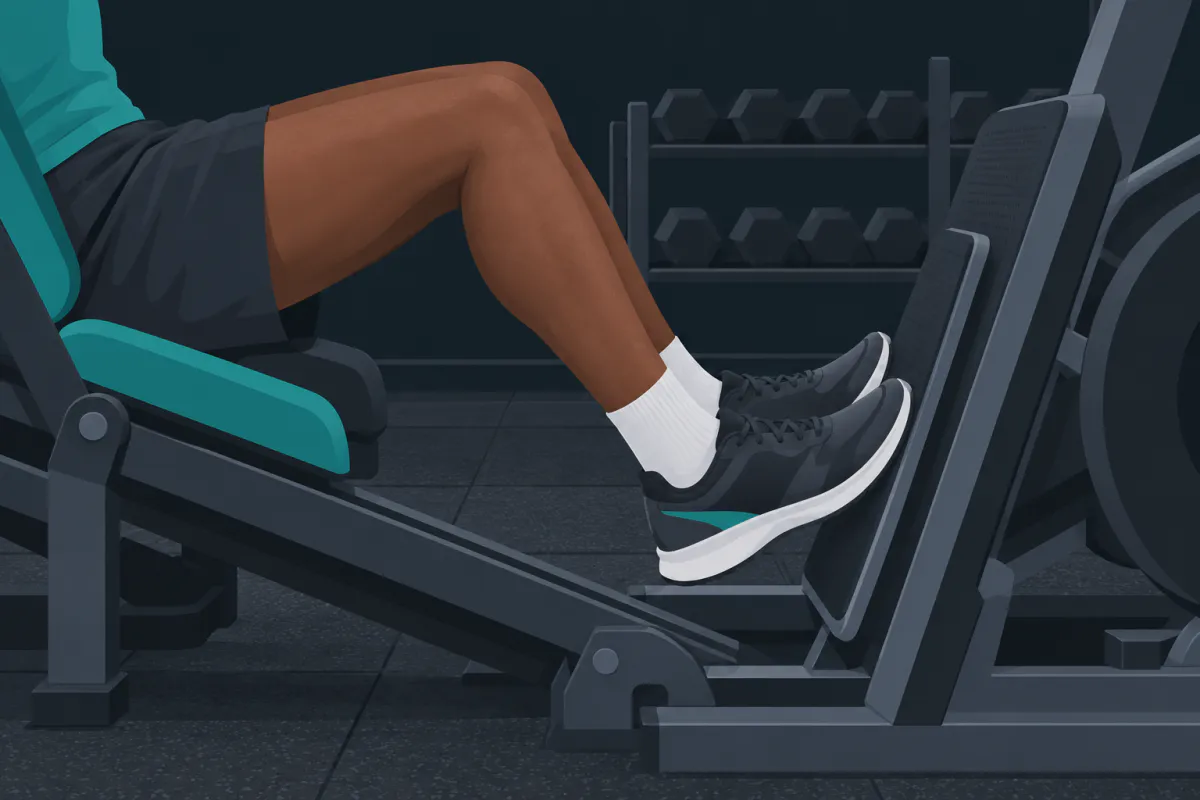
Where ACL research does report a frequency, it is usually a range. The OPTIKNEE evidence synthesis by Culvenor and colleagues, which pooled systematic reviews of rehabilitation after ACL and meniscus injuries, describes electrical stimulation of the quadriceps added to rehabilitation two to six times a week in the first 4 to 12 weeks after surgery. The same authors say plainly that there was not enough data to work out the best type, intensity, frequency or length of a rehabilitation programme.
The days between strength sessions are part of the plan rather than a gap in it, which is the subject of rest days in ACL rehab. A programme may still keep some light work daily, such as the movement exercises, while the strength sessions run on fewer days. That shift usually arrives around weeks 6 to 8.
Home exercise and appointments
Most of the work in any programme happens at home or in a gym, not at appointments, so “how often” is mostly a question about the home programme. A large evidence synthesis and a clinical practice guideline have looked at how much supervision is needed.
- The OPTIKNEE synthesis found that structured in-person rehabilitation, with 14 to 36 physiotherapy visits over 2 to 9 months, was generally not better than a structured home-based programme with 3 to 17 visits over the same span. It also found no evidence that a completely unstructured home programme with no supervised visits works as well as one with occasional or regular supervision.
- The Aspetar clinical practice guideline by Kotsifaki and colleagues found no difference between supervised and unsupervised programmes for knee laxity, function, strength and muscle wasting, while rating the certainty of that evidence as low to very low.
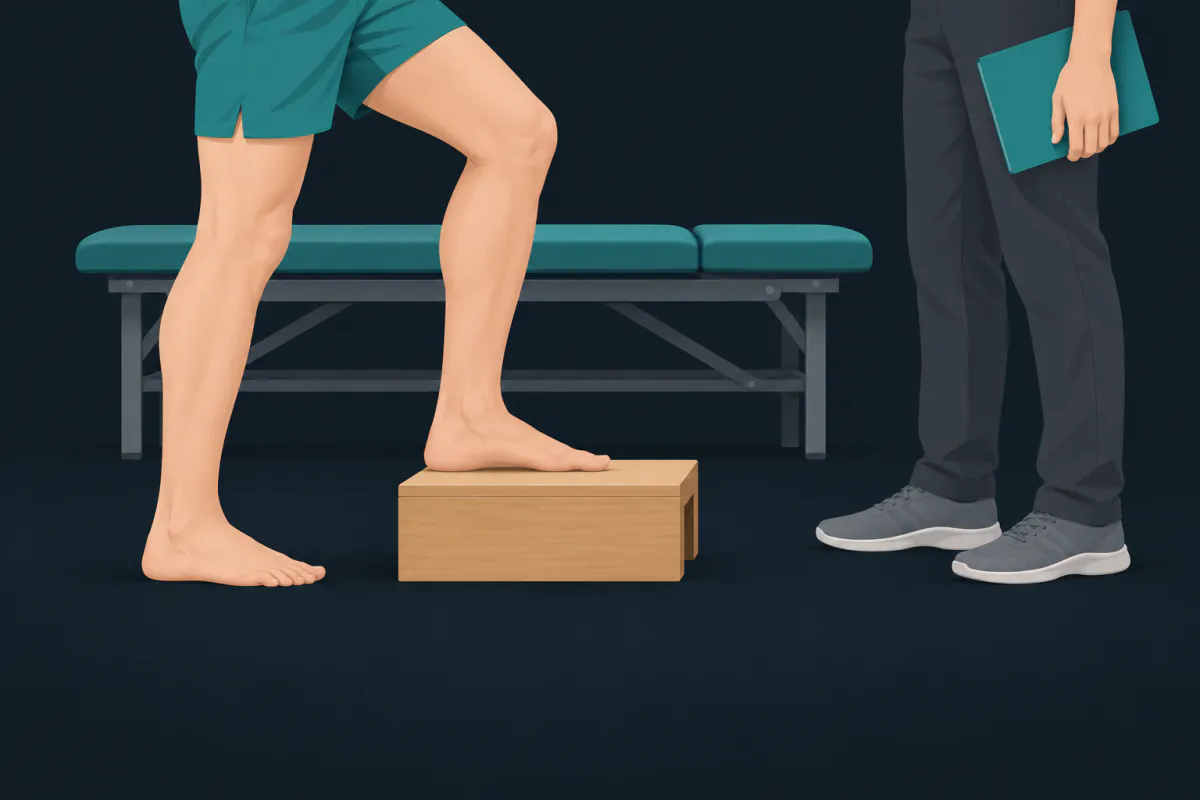
The MOON guideline recommends 16 to 24 visits to the rehabilitation specialist, most of them early, twice a week for the first six weeks. The common thread is structure: a home programme works when someone has set what to do and how often, and checks on it along the way. How many appointments you have, and how often you train between them, is for your physiotherapist to set with you. How reminders can help you keep to those days is covered in reminders for ACL rehab exercises.
When more is not better
Doing extra sessions, or doubling up after a missed one, is not how most programmes are meant to work. Early exercises are prescribed in small amounts for a reason, and strength sessions are spaced so that the muscle recovers. A knee that is more swollen or sorer the morning after training is worth telling your physiotherapist about, since it is one of the signs they use to adjust the load. The difference between ordinary soreness and a setback is covered in pain versus setback in ACL rehab.
Some signs need contact the same day, whatever the training plan. Call your surgical team, your GP or an urgent care service if you have:
- a calf that is hot, red, swollen or painful;
- a fever, or spreading redness or discharge at the incision;
- new weakness or numbness in your foot;
- a knee that locks and will not move.
Where the app fits
ACL Recovery Tracker, a free ACL rehab app for iOS and Android, follows the same pattern. On Levels 1 and 2 the main session is daily and runs three times a day by default, each round a full workout at its own time, and you can change the number of rounds on your level’s screen; from Level 3 the workouts are weekly, with a recommended range such as three to four times a week, and you choose the training days. Care routines such as icing, quad squeezes and raising the leg sit on the Today card several times a day in the early levels. You can use it to set the frequency your physiotherapist gave you and to see on the week screen which sessions were done.
Daily exercise is the right answer for some parts of ACL rehabilitation and the wrong one for others. What matters more than the count is that it matches the stage you are at, and that the person who knows your knee has set it.
The illustrations in this article were generated with AI.
Sources
- Wright RW, Haas AK, Anderson J, et al. Anterior cruciate ligament reconstruction rehabilitation: MOON guidelines. Sports Health. 2015;7(3):239-243.
- Culvenor AG, Girdwood MA, Juhl CB, et al. Rehabilitation after anterior cruciate ligament and meniscal injuries: a best-evidence synthesis of systematic reviews for the OPTIKNEE consensus. Br J Sports Med. 2022;56(24):1445-1453.
- Kotsifaki R, Korakakis V, King E, et al. Aspetar clinical practice guideline on rehabilitation after anterior cruciate ligament reconstruction. Br J Sports Med. 2023;57(9):500-514.
- American College of Sports Medicine. American College of Sports Medicine position stand. Progression models in resistance training for healthy adults. Med Sci Sports Exerc. 2009;41(3):687-708.
- University Hospitals Sussex NHS Foundation Trust. Advice following ACL reconstruction (patient leaflet).
- Lancashire Teaching Hospitals NHS Foundation Trust. Initial post-operative anterior cruciate ligament reconstruction exercises (patient leaflet).
- NHS. ACL (anterior cruciate ligament) surgery: recovering.